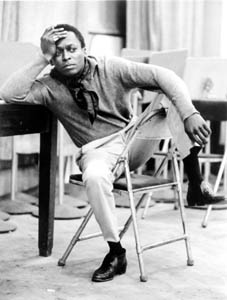
A LOVE SUPREME

I am now blogging at a new blog: erdman31.com

If you post comments here at Theos Project, please know that I will respond and engage your thoughts in a timely manner.

Friday, October 06, 2006

South Park - Losing touch with the real world


I watched the season premiere of South Park on Wednesday night.

The boys of South Park are all excited because of a new online battle video game called Warcraft. Unfortunately there is a middle-aged man out there who has dominated the game to such a degree that no one can make any progress. This is a concern for the makers of the game because everyone will quit playing as they get discouraged by their lack of progress.

Cartman, however, develops a scheme whereby they can get enough experience points to defeat this middle-aged man. However, it will require hours on end of dedication to the game. Cartman is ready to go, but the other boys balk. Finally Cartman convinces them by saying, "You can stay out here and play in the sun, or you can get to the computer and do something that really matters!"

The boys all get on board and in the end all their hours and days on end of playing the game pay off when they defeat the middle-aged man. In the process of playing, however, their bodies get deformed: They gain weight and develop grotesque acne on their faces. Doing something that matters has a price!

Now, initially we would be critical of such an endeavor. Have the boys really done something that "matters"? All the time they spent was simply in a fantasy world. They are impacting an game that is on the internet: an artificial world - a created reality. The internet isn't real, right? So what the boys did doesn't matter, right?


For the boys we can understand. I mean, after all, they're just kids. But what about the unemployed, middle aged man living with his mother who plays the game for 20 some hours a day. That's the dude that we are going to be hardest on, right? I mean, what is he really doing with his life that "matters"?

But before we condemn the middle-aged guy, what about the career-man who works for 18 hours a day? Has he done something that matters? What if he's doing it for God? Does it matter that he has disconnected himself from anything outside of his office?

One might say that the career-guy is superior because he is in the real world. Ok, then what about if we go home at night and disconnect from the real world by losing ourselves in a novel for a few hours every night? Is this an illegitimate activity? I mean, when I'm into a good novel I am absolutely gone - my mind is in an artificial fantasy world. Is this any different than the middle-aged guy playing Warcraft?

What do you do to lose yourself? Don't we all have fantasy worlds to escape the real world? Books, television, the internet, music, and the list goes on....

I have to hand it to the middle-aged South Park character, at least he had passion. He certainly had commitment. I have a problem with how he was channeling his passion, but I'm sure he had his reasons. Without anything going for him in the real world, why not make a go of it on the internet? In Warcraft he has managed to manufacture some small amount of success and pleasure. He has accomplished something here in his fantasy world. To him that is what really "matters."

From our perspective here "under the sun" it seems difficult to really condemn the guy. But from God's perspective things may be different....

Thursday, October 05, 2006

An engagement with Nicholas Wolterstorff "Resuscitating the Author"


Nicholas Wolterstorff
“Resuscitating the Author”
Hermeneutics at the Crossroads
Chapter 2, Pages 35-50
2006


Resuscitating the author, while rejecting “authorial intent”

Wolterstorff begins by distancing himself from the text and drawing closer to the author of the text:

My claim will be that...most of the time all of us practice one, that is basic to almost all other kinds of interpretation, and that this kind of interpretation, rather than consisting at bottom of things done to an artifact, consists of an engagement with a person, which is mediated by the artifact. (36)

This move by Wolterstorff sets the tone for the essay. He is critical of the move by Gadamer and those subsequent to Gadamer who moved away from the author. He speaks of this as hermeneutical “orthodoxy,” which Wolterstorff notes was reactionary:

The orthodoxy in question arose as a reaction to the view that the interpretation of texts is at bottom an engagement with the person who authored the text, in that way, my view is a recovery of what preceded the formation of orthodoxy. But I join with orthodoxy in rejecting what the pre-orthodox said it was that we try to discover and understand when we interpret; that is to say, I hold that our mode of engagement with the author, when we interpret, is different from the pre-orthodox thought it was. They held that its goal is to get at the authorizer’s intention; I hold that its goal is to get at what the authorizer said. Those two, I argue, are not to be identified with each other. (36-37)

Wolterstorff’s first move – to recover the author (“an engagement with a person”) – seems clear enough, particularly throughout the essay as he criticizes the hermeneutics that has moved away from the author and into the text. But it is much more difficult to discern what Wolterstorff means when differentiates “the authorizer’s intentions” and “what the authorizer said.” Wolterstorff criticizes those who seek “the authorizer’s intentions.” But if Wolterstorff moves away from “intentions,” isn’t he moving away from the author, at least in some way? From Wolterstorff’s essay it is difficult to see how he can criticize a focus on authorial intent and at the same time can speak of interpretation as “an engagement with a person.” We will see, later, how Wolterstorff brings this together.

Criticism of “hermeneutic orthodoxy”

Wolterstorff then criticizes those who move away from the author and towards a focus upon the text, itself. He describes the move away from the author and towards the text as “hermeneutic orthodoxy”:

What is it, according to the hermeneutic orthodoxy of the latter half of the twentieth century, that the interpreter should aim at?…interpretation deals with texts rather than persons…the meaning, or the sense, of the text…Textual-sense interpretation, as I call it, has been the orthodoxy of pre-deconstructionist twentieth-century interpretation theory…(italics belong to the author) (38)

That which one understands, when one understands a text, is not “a repetition of something past” but “a present meaning” shared between author and interpreter. It is, if you will, an ever-present meaning. (39)

It is not really a relationship between persons, between the reader and the author (who is, perhaps quite unknown), but about sharing in what the text shares with us. (40)

For Ricoeur, as for Gadamer, the central goal of interpretation is to identify and grasp the meanings of the sentences of the text…we can just as well say that the goal of interpretation is to identify and grasp the propositional content of the illocutionary act. (41)


Wolterstorff then levels his major charge against those who detach the text from the author:

If we insist on leaving authors out of the picture, and taking the text in itself as the object of interpretation, then I think textual-sense interpretation cannot but give way to performance interpretation; there is no way to stop the slide. (46)

Wolterstorff explains that “performance interpretation” is what happens when “one imagines what some French writer of the early twentieth century might have meant had he produced the text of Don Quixote…what some writer of Kantian persuasion might have meant had he produced the text of the Prologue of John’s Gospel…” (46)


But this is a point that I am not entirely clear on. How is it that a move to the text, as Wolterstorff has described of Gadamer, can give way to this sort-of radicalization. Wolterstorff clearly seems to be presenting some form of the “slippery slope” argument, but he is not as clear as to how a focus on the text takes us down this slippery slope.

(The thing about slippery slope arguments is that one must clearly demonstrate the how a position takes one down the slope, and cannot merely assert that such is the case. After all, if we all began to use the slippery slope argument without substantiation this would take us down a slippery slope, indeed!)

The point is simply that I did not find Wolterstorff convincing that the hermeneutic of Gadamer/Ricoeur would take us into the so-called “performance interpretation.”

Wolterstorff’s alternative: “Authorial Discourse Interpretation”

Wolterstorff is now ready to focus on his alternative to “authorial intent” and “hermeneutic orthodoxy”:

My contention is that none of us practices performance interpretation most of the time…46
The mode of interpretation that most of us practice most of the time is that which Derrida is calling for on the part of those who interpret his writings. I call it authorial discourse interpretation. In authorial discourse interpretation one seeks to identify and grasp the illocutionary acts that the authorizer of the text performed by inscribing, or in some other way authorizing, the words that one is interpreting. (italics belong to the author) (47)


So, Wolterstorff’s alternative is “authorial discourse interpretation.” This is intimately tied to the illocutionary acts. What are these “illocutionary acts”? Wolterstorff does not really explain in this essay, and there is a bit of ambiguity as to the precise nature of an illocutionary act. However, it would have aided Wolterstorff’s essay immensely to define how he is using the term illocutionary act, since to my knowledge there is still some ambiguity attached to this term and it has been used with slightly different nuance in varying contexts.

By outlining his authorial discourse interpretation Wolterstorff wants to distance himself from “hermeneutic orthodoxy” while at the same time avoiding the “pre-orthodoxy” mistake of focusing strictly on authorial intent.

But despite his distance from authorial intent, Wolterstorff does make one qualification on authorial intent:

These observations lead me to attach an explanatory qualification to my main thesis, however. Sometimes, when it is clear to us that what the author said is not what he intended to say, our interest is more in what he intended to say than on what he did say. (48-49)

In his conclusion, Wolterstorff takes note of what he believes are ethical implications of interpretation:

My account of interpretation has important ethical implications. If the interpretation that most of us perform most of the time consists of engaging a person rather than just doing something to an artifact, then the issue arises of whether we have engaged that person justly, charitably, honorably, and the like. (49)

There do certainly seem to be ethical implications to Wolterstorff’s theory of interpretation, but this seems to be the case only if we tie the text so close to the author that a violation of the text represents a violation of the author of the text. But surely this cannot always be the case. A person who, unwittingly misunderstands and thus misrepresents my writing does not seem to be violating any higher order moral value. And perhaps it is for this reason that Wolterstorff speaks of acting “charitably” or “honorably.” Rather than having an ethical obligation to interpret correctly, it would seem the ethical obligation is to simply do one’s best to interpret. But does the author have a similar obligation in communicating? What if an author has not done his or her best to communicate? In my opinion it may get complicated to start to assign ethical obligations to readers and authors. This is not a reason to shy away from it, however, because most of the time the assignment of ethical obligations gets complicated!


Engaging Wolterstorff: What is the issue? The author and the text.

What emerges from this insightful essay of Wolterstorff’s are questions of interpretation. More specifically, the questions center on how closely the text is tied to the author. On the one hand, it seems clear that once the text is written it is detached, in some way, from the author. The author can no longer control it. The author will even be physically detached from his or her text. (Especially if said author is deceased.) The text may even undergo revisions and translations that alter it in insubstantial ways. Furthermore, the author may not even completely understand the text after having written it. Imagine authoring a text at the age of 18 and then revisiting the text 50 years later. Would the author recognize his or her work, anymore? Would they be able to “transport” themselves back 50 years into their mind-set and be able to discern their “intentions.” In all likelihood they would not!

Furthermore, imagine a scenario in which an author pens a powerful and insightful text and does so with great thought and care. Because it is such an original and penetrating text it is studied for generations on end by the brilliant scholars of each age. Is it not conceivable in this scenario that those who study it in later generations might have a better understanding of the text than the author? Perhaps those of later generations would be able to detect nuances and subtleties that the author missed? Or perhaps they would better understand the historical situation of the text even better than the author?

But we can even move this scenario into everyday life. If a child writes a summary of the days events in their diary would it really be so inconceivable that an insightful parent might not better understand the text than the child, themselves? Is it inconceivable that someone more familiar with the issues I am raising in this text might better understand it than myself, its author?

For all of the above reasons it seems as though the text exists as its own entity. Readers can take ownership of it and, to some degree, it becomes their playground. However, does this mean that we can completely detach the text from the author? I think not. As I review my own text above I note that in one place I state in parentheses that “Italics belong to the author.” Why do we do this if not for the fact that at some level we recognize that the text is a creation, and that every creation has a creator.

God created. He created his world. But his world is now detached. Perhaps in some way this mirrors the fact that every text belongs to the creative ingenuity of the author and yet the author must relinquish the text. The text becomes its own, and yet it always remains a created entity, a creation of the author.

Citation:Nicholas Wolterstorff, “Resuscitating the Author” in Hermeneutics at the Crossroads, ed. Kevin J. Vanhoozer, James K.A. Smith, and Bruce Ellis Benson (Bloomington and Indianapolis: Indiana University Press, 2006).


Other essays reviewed in Hermeneutics at the Crossroads:
Bruce Ellis Benson "The Improvisation of Hermeneutics"
James K.A. Smith "Limited Inc/arnation"
Kevin Vanhoozer "Discourse on Matter"
Nicholas Wolterstorff "Resuscitating the Author"

Tuesday, October 03, 2006

Would Jesus sell on Ebay?


For most of my life I have viewed the goodness of God as a treasure and as a pearl to be pursued with all of my energies. That I have been sidetracked, knocked off course, or otherwise distracted from this pursuit has been part of the battle that I have called "faith."

To commune and fellowship with the awesome and indescribable God has been what I consider to be the "pearl of great price" in my life:

"The kingdom of heaven is like treasure hidden in a field. When a man found it, he hid it again, and then in his joy went and sold all he had and bought that field. "Again, the kingdom of heaven is like a merchant looking for fine pearls."
Matthew 13:44-45

I love these two little analogies by Jesus. They capture the heart of God-seeking and the essence of the Gospel: A relentless pursuit that completely consumes us. It is truly dangerous, and I say that in all seriousness: The pursuit of God and dedication to Christ has completely destroyed people of faith. To paraphrase C.S. Lewis: God is good, but not tame.

In recent years I have wondered about the "one-size-fits-all" models of sharing the faith. Whether this takes the form of "The Four Spiritual Laws" or "The Romans Road" or even if this takes the form of an intellectual apologetic I have often questioned the wisdom of starting with a pre-packaged plan for sharing the Christian faith.

For example, in Matthew 7:6 there is the suggestion not to give to dogs what is sacred:

Do not give dogs what is sacred; do not throw your pearls to pigs. If you do, they may trample them under their feet, and then turn and tear you to pieces.

What does this mean?


Is it possible that giving people pre-packaged salvation plans we are throwing our pearls to the pigs? If someone ain't interested in the faith is it ok to say, "Cool. I hope that works out for ya'?"
As an example I think about the stuff that I value. I don't have a great deal of material possessions with very much value, but I do have an autographed Reggie Miller card that I value very highly. I have it on a plaque on my wall. Would I let just anyone put their hands on it? Would I loan it out or treat it cheaply? Absolutely not. Because I value it so highly I only let people have a look at it who can appreciate its worth. We know how much we value something by how we treat it.

Are there some with whom I would not want to share the faith because they are only looking to get something? A god-fix or a little spirituality? Do we market and advertise our Christianity as the best religion out there in hopes of attracting those who are looking for a good religion? Is this sometimes what we are doing under the guise of "meeting needs"?

In our psycho-spiritual age it is fashionable to have some god in our lives and to connect with the "Other." Do we give our generation what they want?

Is Jesus the answer to everyone's neurosis or the solution to all of our psychological woes?
Am I a heretic if I say that Christ is a pearl of great price that might very well cost a person more than they get in return? It certainly feels wrong to even write those words...let alone italicize them...let alone post them on the internet....

If I were to put Christ up on Ebay I think I would sell a heavy and bloody cross with a price tag that says "Everything" and see if people clamor to get their bids in.

Monday, October 02, 2006

God-feelings

There are times when I feel the emotional burden of the evil in the world. These are usually times that overwhelm me, and it is usually triggered by a specific instance of evil and pain that leaves me particularly disturbed. It may be the abuse of a child or some other innocent victim who is destroyed by the evils of mankind.

It is at this point that I sometimes begin to consider all the evil in the world. I consider the fact that these instances of evil happen quite literally every day. Evil men oppresses and abuse the innocent.

Again I looked and saw all the oppression that was taking place under the sun: I saw the tears of the oppressed- and they have no comforter; power was on the side of their oppressors- and they have no comforter.
- Ecclesiastes 4:1

Qohelet (the writer of Ecclesiastes) understood this fact and wrote about it several thousands of years ago. This simply shows us that such abuses have been taking place for ages on end, with no end in sight.

There are times when all of the pain and suffering weighs heavy upon my soul.

These reflections of mine do not happen all that often because, frankly, I don't think that I could handle it if it did. But it is at this point that I sometimes start to think about God: How does God deal with his knowledge of all the evil and pain and abuses in the world?

I wonder how God emotionally deals with pain. This, of course, begs the question about whether or not the word emotional is even an adequate term to ascribe God. Is God an emotional God?

There are instances in Scripture where God seems to display God's emotions. One that particularly stands out to me is Genesis 6:5-8

The LORD saw how great man's wickedness on the earth had become, and that every inclination of the thoughts of his heart was only evil all the time. The LORD was grieved that he had made man on the earth, and his heart was filled with pain. So the LORD said, "I will wipe mankind, whom I have created, from the face of the earth-men and animals, and creatures that move along the ground, and birds of the air-for I am grieved that I have made them." But Noah found favor in the eyes of the LORD. (NIV)

Is God experiencing an emotion here? The passage states that God was grieved, and even more so that "his heart was filled with pain." What does this mean? Does it mean that God had the same type of emotional experience that I've been describing?

The question of whether or not God has emotions is an intriguing one. It is a mystery, of course, exactly what God feels, and whether or not those feelings are the same kinds of feelings that you and I experience. But perhaps we can be content with a little mystery and simply call them "God-feelings."

I doubt that God has the same type of emotional experiences that I have because, afer all, he is God. But on the other hand, God may actually experience emotions on a deeper and more intense level. If God has more power than anyone else and if God knows more than anyone else, is it possible that God feels more than anyone else? I don't know the answer to that. So, for me, I'll be content to speak of God-feelings. And maybe someday I'll get a chance to ask God how he's feeling. Maybe I'll ask the Son if he remembers some of his feelings while he walked the earth...speculations and questions...

Now the question of God-feelings raises another issue: Is God actually affected by his creation? Traditionally the doctrine of Impassibility has answered with a resounding, "No"! But a word of clarification is needed here.

The doctrine of Impassibility does not, necessarily, mean that God does not somehow experience emotions. Rather, Impassibility asserts that God's experiences are not "involuntary surprises."

Consider J.I. Packer:
[Impassibility is] not impassivity, unconcern, and impersonal detachment in face of the creation; not insensitivity and indifference to the distresses of a fallen world; not inability or unwillingness to empathize with human pain and grief; but simply that God's experiences do not come upon him as ours come upon us, for his are foreknown, willed and chosen by himself, and are not involuntary surprises forced on him from outside, apart from his own decision, in the way that ours regularly are.
(From "God without mood swings" at: http://www.spurgeon.org/~phil/articles/impassib.htm)

Another quote by Philip Johnson goes right to the point:

God is the sovereign initiator and instigator of all His own affections-which are never uncontrolled or arbitrary. He cannot be made to emote against His will, but is always the source and author of all His affective dispositions.
(From "God without mood swings" at http://www.spurgeon.org/~phil/articles/impassib.htm)

So, in other words, God is not at the whim of us. His "mood" or "emotions" do not swing back and forth based upon what we, his little creatures, choose to do or not do.

The point of the doctrine seems to be to preserve the greatness and transcendence of God. God is big. God is great. God is not affected by wee mortals, like us.

However, one problem with the doctrine of Impassibility that we notice right off the bat is that Scripture actually presents God as reacting to his creation. We do not see a God who planned out his experience, but a God whose experience was related to our experience. This is how the narrative of Scripture presents God to us. As such, we ought to take it somewhat seriously.

Now, those who assert Impassibility will simply say that God is not being presented as he truly is, but that this is a presentation of God in human terms, for our benefit. As Calvin said, God "lisps" to us kind of like a nursemaid to a little child. So, according to Calvin and others who assert Impassibility, the Scriptures present God in human terms so that we can get an understanding of who he is, even if what we see in Scripture isn't quite exactly who God is.

This, of course, is a fine response. I don't know that it is entirely true, but neither can I falsify it. After all, how do I know for sure whether God planned out and initiated his emotions, or whether he is going with the flow like the rest of us? It seems to me to simply be beyond me.

But for now I will stick with my quaint little term: God-feelings. God seems to be experiencing something in his Being. We bear his image in some strange way. And when we feel the pain of the abuses and evil in this world we can know that in some way we are mirroring our God.

Friday, September 29, 2006

Birth of the Cool


Jaden Miles Joiner
Welcome to the world!

Tuesday, September 26, 2006

Bringing Sexy Back

So, Justin Timberlake is bringing “sexy” back. Apparently our society is running on a shortage of sexy these days, and J. Timberlake is just the man to bring it back for us.

Of course, this poses the question: What is sexy? This is the same question that floats across the screen of my tv during a Victoria Secret commercial.

“What is sexy?”

It’s the unresolved question hanging out in the void like the various body parts of the models who are displaying their various….er, well, anyway, it’s their version of sexy.

The other night I was playing basketball and blocked my good friend. (I won’t mention that his name is Mike, lest he be embarrassed or otherwise humiliated.) But for me this isn’t really that big of a deal. I mean it is always nice to be able to trash talk each other while we are together as a group of guys, but it has happened so many times that for me it is becoming somewhat routine. This, of course, is due to the Law of Diminishing Returns.

The Law of Diminishing Returns:
In a production system, having fixed and variable inputs, keeping the fixed inputs constant, as more of a variable input is applied, each additional unit of input yields less and less additional output……All righty, then….basically what that is saying is that the more of something you have the less enjoyment you get out of it. Or, the more you do something the less pleasure that it will bring you…

So, let’s go back to “sexy” and Justin Timberlake. Do we really need to bring “sexy” back?

Well, actually this time I’m going to agree with Justin. I think we have completely lost the true sense of sexy. We have sex, but not sexy. We have more sex than we know what to do with. It’s everywhere. Every body part. Every movement and motion. We’ve seen it all. It dominates the visual.

Sex is in our language, too. It saturates our conversations and vocabulary. It finds its way into every comedy routine and into seemingly every sitcom story line.

We can download anything we want in just seconds. Any fantasy world that we want to enjoy is ours for the taking. Imagine, right at our fingertips. It is literally unprecedented that humanity would have the kind of access to sex that we now have today.

But for all the sex there is no doubt in my mind that we have lost the sexy.

The sexy is deeper than sex. Sex is cheap, but sexy is not. Sex for us is about indulging, but sexy is about intrigue.

The truly sexy is a rare thing. It is a stimulation of the physical senses that finds its origins in the intangible and undefined portions of our being. Sexy cannot be completely defined because it starts from someplace so deep that we don’t even recognize where it came from. When sexy is genuine it isn’t something you can completely suppress. It takes a hold of you and it won’t let you go. You may be able to tame it. You may be able to control it within certain parameters, but you can’t suppress it. It is deeply wild and untamed.

Sexy cannot and will not be mastered. To master sexy simply means that you never had it to begin with.

Of course, at this point it is clear that sexy is something that we very rarely find in our lifetime. As I said, it is about intrigue, not indulgence. We can market and sell gratification. We can package and distribute sexual satisfaction. But no one can give you sexy. You can’t buy it at any price. It finds you, but only if you’re lucky.

But what happens if we have it and then lose it? I think this is the easiest thing in the world to do. One reason why it is so easy to lose is because we think that sexy is about sex. We mistakenly think that our sensual stimulation is just another urge to gratify. And hence we can lose the sexy because we have mistake it for another object for our own consumption. But to make this mistake is to lose it.

The sexy is not about gratification.

It is easy to lose the sexy because we have no idea what to do with it when it comes. We confuse indulgence with intrigue. We have become so accustomed to using sex as gratification that we simply don’t know what to do when sexy finds us.

Sexy must be cultivated. To control it is to lose it. To indulge it is to lose it. But to respect it is to enter into the world of intrigue.

As my grandfather would say, “Leave a little to the imagination!” This is a lost cause in our age, and I doubt very much that Justin Timberlake is, in any way, bringing sexy back. The pop, mass-marketing media that has absorbed simply him wouldn’t let that happen. This is a world of immediate gratification and physical self-satisfaction. It leaves little room for the kind of intrigue and stimulation that lights up the heart, the mind, as well as the eyes.

Monday, September 25, 2006

Qohelet rescues the doctrine of total depravity

For quite some time I have been rather dissatisfied with the doctrine of total depravity. For those of you keeping score at home the doctrine of total depravity basically says that sin affects all aspects of human nature. The name of the doctrine is rather unfortunate because the word "total" in "total depravity" does not mean that human beings are as bad as they could be or "totally" sinful. The "total" in "total depravity" refers to the fact that all of a person's being is affected by sin. In today's language, however this significance is lost...but no matter, this is a side note...

I have had a gripe against this doctrine because it often seems so static. When I hear this doctrine presented it is often just kind of thrown out there: "Human beings are corrupt" or "People are bad." Anytime I have heard this doctrine presented it has left me hanging there - it's a cliff hanger. I usually kind of cock my head to one side, scrunch my face and think, "The world is messed up? People are bad? So, what. That's not news to me or anyone else."
In most situations in which I hear about the doctrine of total depravity this cliff hanger is relieved because the Christian who is explaining the doctrine of total depravity begins to talk about his or her real point, which is the fact that people need Christ. So, most of the time when people talk about the doctrine of total depravity it is a bridge builder: We use it to get to our real point, which is that people need something. But I see this as a problem.

The first thing is that people don't come to Christ unless they see the need for Christ in their
lives. Here's the formula: Needy Me + Christ = Christian. But this compeletly misses the point, because human need (i.e. our own depravity) cannot merely be one of the factors of an equation. To simply say, "Ah, well, ok, I'll add some Jesus to my need" is to miss the point of conversion, which is a deeply spiritual and life-changing event.

So, what do we need here? More than simply acknowledging our personal depravity is the fact that we must feel it. I mean that we need to feel it deep down as a burden ,as a weight that is holding us down and as a cancer that is destroying us. We must feel ourselves on our spiritual death bed in a hopeless state of misery. This is far more than an intellectual acknowledgment of a particular doctrinal point. What we are talking about here is something deeply personal. So deep, in fact, and so personal that it is possible to feel our depravity even if we could not express the doctrine in words or write it out as a theological formulation.

The problem, then, with presenting a static doctrine of depravity is that it seems to suck the life out the Gospel. The doctrine of depravity is something dynamic that we experience and feel on the deepest of levels. Without this feeling, forget it. Move on. Don't waste your time talking about the cure if someone is not sick. Let them live and wish them well in their life! Why try to convince a person to believe, intellectually, a doctrine whose whole point is to feel the doctrine on a spiritual level?

Now, if anyone is going to really feel the doctrine of depravity and if we are to present a doctrine that is dynamic and not static, then we have to camp on it. We have to give pause and truly ponder what it means to live as a depraved person in a depraved world. We have to step back and submerge ourselves in life; to engage in a deeply reflective conversation with our human situation.

Qohelet enters stage right...

This is the whole point of Qohelet (the author of the book of Ecclesiastes) - to examine the human condition. Qohelet is on a quest, and his quest is the quest of all persons: to explore and understand the world. To drink from the wells of experience and to eat at the table of knowledge and understanding. Consider Qohelet's own statement of purpose:

I devoted myself to study and to explore by wisdom all that is done under
heaven. (1:13)


This is Qohelet's quest. And his conclusion quickly follows:

What a heavy burden God has laid on men! (1:13)


Life, as we know it is backwards from what it should be. As Qohelet relates his quest he finds that at every turn there is either frustration or the potential for frustration. The world as we experience it is messed up. It is a burden.

The fascinating thing about Qohelet is how he seems content to just camp on this theme. Many perceive the Bible as a handy answer key to life. A book with all the right things to do and say. But Qohelet shatters this perception of Scripture. With Qohelet we have a whole book of the Bible, twelve chapters in all, that takes the time to discuss all of the worst things about living!
But notice what Qohelet does. He does not simply talk about the bad in you and I, but talks about the system as the world. Life "under the sun" is subject to the worst uncertainties. Our sense of meaning and purpose is frustrated. We seek for more, but there is nothing more to be found. If one reads Qohelet they quickly begin to feel tension and even contradiction. It is a disturbing book, but this is exactly what Qohelet wants us to feel. We must feel the tentions because Qohelet was burdened with these tensions, and so is anyone who begins to live life and seriously examine it from life's many different angles. Life is "crooked." (1:15, 7:13)

The world, as a system, is meangingless and absurd. The word "meaningless" or "absurd" is the word Qohelet uses thirty some times to label various aspects of human experience and situations. (The Hebrew word is hebel (pronounced he-vel).) But after we have camped on the absurdity of the world's system it is quite easy to discuss the depravity of the human being. This is because the depravity in each of us is one of the major contributors to system that is so absurd.

So, what would we do without Qohelet? The doctrine of depravity might possibly become doomed to quipes and cliches. Qohelet opens our minds up to the ramifications of living in a crooked world. We are crooked people in a crooked world.

Sit on that stuff for a while. Discuss Qohelet at the coffee house. Talk about the crooked world of Qohelet and I guarantee you'll generate some chatter. What is there "under the sun" that can be predicted? Where are the easy answers in life? You won't find them in Qohelet.

And now you're ready to talk about total depravity. And then you're ready to talk about the Gospel.

Tuesday, September 19, 2006

Do Panda bears commit suicide?


According to an article in Slate they just might. Consider the case of Yaya:

A sleep-deprived panda inadvertently crushed her newborn cub to death at a zoo in China last week. "Pandas who lose their young tend to be depressed for a month or so," said a
zoo official
. "Yaya appeared to be so sad when she couldn't find her baby. …Tears could be seen in her eyes."

In the past I used to think a great deal about what, exactly differentiates human people from the animals. I used to think it was the fact that animals didn’t commit suicide. Human beings seem to desire to reach out for more than what the material world can offer; that we are spiritual and thereby have a yearning for something deeper from life.

Subsequently, I have found that there are plenty of people content to submerge themselves in the material world and carry about their life as though they were animals – even worse than animals sometimes…and now I find out that animals have a psychological side!

Well, I guess I’ll have to rethink this one a bit…What separates the person from the animal???


Find the slate article cited above here:
http://www.slate.com/id/2149682/?GT1=8592

Thursday, September 14, 2006

Tuesday, September 12, 2006

Monday, September 11, 2006

9/11 Remembered


United States v. Zacarias Moussaoui Criminal No. 01-455-A Prosecution Trial Exhibits Exhibit Number P200336 Description - Collection of photographs of those killed (except for 92 victims) during the terrorists attacks on September 11, 2001

Wednesday, September 06, 2006

Kevin Vanhoozer - "Discourse on Matter"


Kevin Vanhoozer is an editor of a new collection of essay's on hermeneutics. His essay is particularly fascinating and I have interacted with it in depth here:
http://erdman31.googlepages.com/Review-Vanhoozer-DiscourseonMatter.pdf

Here is my brief summary of Vanhoozer's article:
Vanhoozer raises a critical question for hermeneutics and biblical interpretation: To what extent are we active in the process of interpretation, and to what extent are we passive? Another way of putting the question is: Is interpreting the biblical text something I have control of, or is there a more mystical and intangible element at work. The intangible element is represented by the school of philosophical hermeneutics.Vanhoozer shows that philosophical hermeneutics, represented particularly by Hans-Georg Gadamer, appeals to a mystical or even a “miracle” element in the nature of understanding. Vanhoozer takes seriously the contribution of philosophical hermeneutics and finds a similarity with the thinking of Karl Barth. Vanhoozer, however, adds a distinctively Christian twist to what he perceives as secular hermeneutics. The twist is that rather than appealing to the mystical or the miracle element, as Gadamer had done, Vanhoozer employs Christian theological categories like “grace,” “illumination,” and the activity of being “in Christ.”

Here are the first few paragraphs from my in-depth interaction that I noted above:
I find Vanhoozer’s recent essay on understanding to be a very critical and important work for hermeneutics in general and for biblical studies in particular. Vanhoozer raises a fundamental question for interpretation and understanding, a question that has been kicking around here and there for the past century or so in one way or another amongst scholars and academics, not the least of which are the likes of Hans-Georg Gadamer and Karl Barth. Vanhoozer clearly articulates this question and seeks to explore the answer within a distinctively Christian framework.

The question goes as follows: “Is understanding a type of active mastery or a passive happening? Is it something the interpreting subject does, or is understanding done to the interpreter by the subject matter."

This has been a critical question in my mind for several years and I believe it has critical ramifications for biblical studies on all levels: from the most erudite and academic considerations to the most practical interactions of pastors and teachers within the local church setting. The question centers on the extent to which we as interpreters have control over the process of understanding and the extent to which we, ourselves are actually controlled by the biblical text. Are we in control of the Scripture, or do the Scriptures control us?

If we are the masters of interpretation, does this mean that biblical interpretation is strictly a matter of applying the right rules and procedures? Can we gain understanding by simply applying the right method of interpretation? Or is there something more – something intangible that is at work in this process of understanding the written Word of God?

Citation:
Kevin Vanhoozer, “Discourse on Matter: Hermeneutics and the ‘Miracle’ of Understanding,” in Hermeneutics at the Crossroads, ed. Kevin J. Vanhoozer, James K.A. Smith, and Bruce Ellis Benson (Bloomington and Indianapolis: Indiana University Press, 2006).


Other essays reviewed in Hermeneutics at the Crossroads:
Bruce Ellis Benson "The Improvisation of Hermeneutics"
James K.A. Smith "Limited Inc/arnation"
Kevin Vanhoozer "Discourse on Matter"
Nicholas Wolterstorff "Resuscitating the Author"