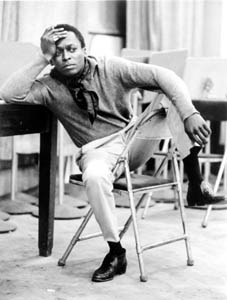
A LOVE SUPREME

I am now blogging at a new blog: erdman31.com

If you post comments here at Theos Project, please know that I will respond and engage your thoughts in a timely manner.

Thursday, January 11, 2007

Theology of Sexuality

I wonder if there are any really thoughtful works that develop theological thoughts on sexuality. I am thinking particularly from a conservative Christian position. To clarify, I am not talking about easy reading stuff that repeats the same old belief systems with a few biblical proof texts thrown in for good measure. I mean someone who has engaged with Scripture, contemporary psychology, sociology, and especially culture (pop culture and sub-cultures) and has developed accute and insightful thoughts that wind up still being conservatives. (Conservatives tend to write masses and masses of books, but many times if a conservative "deals with" a topic like sexuality they all just basically say the same thing and its stuff we all already know anyway....)

Where would one begin on such a topic?

In our American culture there are many very relevant issues and questions. The most obvious is the homosexuality issue. But this, as far as the greater culture is concerned, is already settled over and against the conservative perspective.

There are, of course, other issues that hit closer to home. For example, why not experiment with sex before marriage? Why not have live-in relationships with a serious boy/girlfriend? What is the real harm of an extra-marital fling if its all in good fun? How can there be any real moral consequences to getting some (or all) sexual needs fulfilled in cyberspace? It seems so perfectly harmless, right? Just a boy and his computer? Just a girl and a screen?

Are there really sexual norms that apply to all people at all times? Or is sexual im/morality tied to culture and changes over time? If we believe there are rights and wrongs that apply to all then what about instances of polygamy? Multiple wives by King David? Abraham sending Haggar away?

Where would one begin in developing a theology of sexuality? Something that engages the biblical texts in a serious and honest way. Something that is equally engaging with the current culture as well as with some of the stuff being put out by psychology and sociology, and even philosophy....

Where would one begin in developing a theology of sexuality?

Tuesday, January 09, 2007

Hermeneutical Posts of Interest

A couple of insightful hermeneutical posts by Cynthia Nielsen where Yours Truly has provided some extremely dis/interesting commentary....

Cynthia explores Benson Benson's analogy between hermeneutics and the improvisation found in music:
Musical Hermeneutics
Here is the article by Cynthia on her blog discussing Echeverria's article on Gadamer:
Is Gadamer a Relativist?

Monday, January 08, 2007

Prediction


They are getting ready to kickoff right now.....I'm calling an Ohio State demolition derby! A big time win for OSU over Florida.

And somewhere my old college roommate, Kenneth, will be weeping in a few hours!!!

Saturday, January 06, 2007

"Tradition!"


I'm sitting here on a Saturday night watching Fiddler on the Roof. An interesting quote at the beginning of the movie:

Because of our traditions everyone of us knows who he is and what God expects him to do.

What are the consequences of living in a pluralistic society and culture where traditions are virtually non-existent? Or, perhaps traditions exist, but their meaning is far less significant than it used to be. After all, traditions are more of an interesting curiosity, not something that is so deeply meaningful that we invest in them our self-identity.

With the loss of tradition does that throw the self in flux? Do we no longer know who we are? Do we no longer know what God expects? Do we know longer have a stable idea of who God is? Do we lack a center - a loose composition of fragments of meaning strewn together to form a self?

Traditions provide stability. But don't take my word for it....

Without our traditions our lives would be as shaky as.....as a fiddler on the roof!

Friday, January 05, 2007

Bruce Ellis Benson "The Improvisation of Hermeneutics"


I would like to begin by way of a personal example. I have over the past few years began to seriously question whether or not “biblical interpretation” should be taught. I have a small Bible study discussion group that meets on Sunday mornings at our church. I have thought, on several occasions, that it would be good to teach a class on interpretation. And yet as I contemplated this I realized that each time we opened our Bibles on Sunday morning to study we were conducting a biblical interpretations class – and we were doing it quite well! Without even realizing it we were all becoming better interpreters of the Bible because we were all doing interpretation. Furthermore, upon reflecting upon Benson’s piece I believe it may be possible to stifle the process of biblical interpretation by putting in place rules and regulations, which unnecessarily burden the sincere seeker. There must be room for imagination in interpretation. Or, as Benson puts it, “improvisation.”

Benson’s essay, "The Improvisation of Hermeneutics" is the opening act in Part 4 of Hermeneutics at the Crossroads. He specifically addresses some of the ethical concerns of hermeneutics. Benson states in the conclusion: “My concern here is a deeply ethical one. If the author should not die so that the reader may live, then neither should the reader have to die so that the author may live…As interpreters, we owe much to authors and their texts. But authors and texts are – if not equally – at least clearly dependent upon interpreters and interpretive communities.” (205) This quote echoes Benson’s refusal to give a privilege to either author, text, or interpreter in the hermeneutical process. Rather, what interpretation is is the result of an improvisational moment similar to that of a jazz performance: “The typical way in which jazz pieces are performed is that the “head” or melody is stated, then succeeding choruses improvise upon it, and then the performance concludes with a restatement of that melody…The further one can go – and still remain in touch with the piece’s structure – the better the improviser one is.” (206)

An improvisational model of hermeneutics, as Benson develops it, would seek to do justice to both the author, the text, and the interpretive community. (194) This is not merely a license for play on the part of the reader. For example, Benson comments on a Scriptural hermeneutic: “A pastor is not allowed to ‘improvise’ on 1 Corinthians for a sermon in the same way that Paul was ‘allowed’ to improvise on Old Testament and early Christian texts in composing 1 Corinthians. There are ways in which an improvisation can be deemed ‘faithful’ to a text and ways in which it can be deemed ‘unfaithful.’” (205) As such, it is improvisation “all the way down” including on the part of the author. Benson puts the author and reader alike in a process of improvisation. In fact, “It is safe to say that in jazz the roles of composer and performer are so clearly interwoven that a clear distinction between the two is significantly complicated – even though there is still a distinction.” (197) Hence in jazz improvisation is actually the intention of the composer. (198) In my view these thoughts of Benson’s go to an essential hermeneutical point: Interpretation can never be strictly defined in advance. Interpretation must always make room for revision. This goes back to my point in the opening paragraph regarding the learning of hermeneutics. Rules are helpful for learning hermeneutics, but they must always be held with an open hand. This is true even in the case of Scriptural interpretation. One might think that after all of these years of interpretation we would finally have the correct interpretation, and many in Christian circles would make this claim, but each community and even each individual must make an interpretive decision, and this is a decision that can only be relevant if it is actually made in a moment of decision and not simply a moment of rote repetition. And this only become a conscious and relevant decision if it is one that an individual has learned to make by the actual doing of interpretation.

Regarding these last few thoughts Benson actually echoes this on pages 202-03 and brings in Derrida (and then Hirsch): “Attempting to determine what ‘the piece has to say’ or ‘the text has to say’ is not merely a matter of playing the ‘right’ notes or reading the words…Earlier we mentioned Derrida’s conception of a ‘doubling commentary’ that acts as a ‘guardrail’ for the text. While Derrida clearly thinks such a commentary is important, he also thinks that this ‘doubling’ is possible only to a limited extent. For even in doubling there is already an improvisatory moment.” (202) So, improvisation is required even if we want to be most true to the author and the text: “Even when we try to be mere ‘imitators’ or provide ‘literal’ translations of texts, those imitations and translations invariably go beyond the text.” (203)

Finally, I would like to highlight a question that Benson raises regarding the relationship between “improvisation” and the text itself. For Benson the relationship is not one that is simply stated. His view seems to be the last of three options: “Performance practice actually affects the very identity of the piece, not in the weak sense of bringing out possibilities but in the strong sens of actually ‘creating’ (or, rather, improvising) them.” (204) Admittedly, this “complicates” things a bit. Specifically, it complicates the identity of the piece/text. “The piece becomes in effect a historical entity that is affected by subsequent interpretations. On this account, the identity of the piece may subtly change over time, even though its identity would still be continuous. In such a case, its identity would be similar to many other historical entities, such as human persons, who retain their identity despite mental and physical changes.” (204) Benson points to a dramatic example of this in the composition of Round Midnight, which was composed and altered by several performers, including Thelonious Monk, Cootie Williams, Dizzy Gillespie and Miles Davis. (204, 196-97)

For many of us talk about a text changing over time causes us to cringe a bit. However, this is a good cringe, I think. It goes to the importance of preserving the integrity of the text and of the responsibility readers have to the text and the author. However, what I appreciate about Benson’s perspective is the refusal to oversimplify the interpretive process. Benson’s insightful essay effectively utilizes analogies from the improvisation in jazz to provide a very general model and goal for hermeneutics – a process of creativity that continually re-evaluates itself in order to carefully preserve the rights of the author, text, and reader and act in an ethical and just way to all of those who are shareholders in the hermeneutical moment.


Citation: Bruce Ellis Benson, “The Improvisation of Hermeneutics” in Hermeneutics at the Crossroads, ed. Kevin J. Vanhoozer, James K.A. Smith, and Bruce Ellis Benson (Bloomington and Indianapolis: Indiana University Press, 2006).

Other essays reviewed in Hermeneutics at the Crossroads:
Bruce Ellis Benson "The Improvisation of Hermeneutics"
James K.A. Smith "Limited Inc/arnation"
Kevin Vanhoozer "Discourse on Matter"
Nicholas Wolterstorff "Resuscitating the Author"

Vegas - Last set of pictures

Ok, here's the last you'll have to bear of my pictures from Vegas.


Nike town was cool....Nike town is always cool....


Hangin' out at the Luxor....that's a cat, Egyptian cat thing...er something...
(Double click the picture to see the cat thing better. Also notice that my eyes are orange on purpose to match my sweatshirt.)


New York, New York (a section on the strip)


Hangin' out with a random statue guy at one of the hotels. There are lots of cool statue guys and girls hanging out around the casinos and outside the casinos. Everything is kind of like a carnival. There are themes for each hotel. It's a fun place to be - lots of excitement....Yes I am wearing my Notre Dame sweatshirt - and still proud of it despite the whooping by LSU =(


Random golden lion


Good place to eat....incredible cheesecake....


All right, all right, here's a little sample of the cheesecake...you can have a little taste, if you must!


Here the girlfriend I made while in Vegas....alas, it was only a fling....probably for the better, though, she looked really nice, but she was a little rigid and cold once you got close!


I post this because it just goes to show you that we can never escape the long, cruel grasp of Abercrombie and Fitch....maybe someday we can rid the world of A&F and usher in the Kingdom!

Can we make others be good without God?

Yesterday I asked "Do we need God to be good?" I and others seemed to form a general conclusion that, "yes" we can be good without God, and that we can even be good without reference to a universal moral law. For example, why do I need a universal moral law to tell me that I shouldn't take things that don't belong to me? Or that it is wrong to kill someone for no good reason? This discussion deals with motivation. And I don't know that I need God or a moral law to motivate me to do some of these basic good things and to avoid doing other basically bad things.

But the discussion of my personal motivation for "playing nice" with others quickly becomes a discussion of how we get others to play nice with us. Consider this paraphrase of Kant's famous Categorical Imperative: Only do those things that, at the same time, you would will to become a universal moral law. There are striking similarities here with the Golden Rule: Do unto others as you would have them do unto you.

But what if someone rejects these very basic rules? What if someone decides that it is ok for them to kill someone for no good reason? Or what if they decide it really isn't wrong to take other people's stuff? There are those who reject the Golden Rule, and society must punish these reprobates. After all, to not address these people would risk complete societal collapse. How could someone open a fruit stand and sell produce if people were allowed to steal apples whenever they wanted with no consequences???

Ok, fine. So, we need to punish those who steal apples and kill for no good reason. That's clear enough, and it seems rather obvious and self-evident. But as soon as we start to impose a punishment on people who steal we are also, at the same time, imposing our idea of right and wrong. And if a society imposes their idea of right and wrong on someone else they are imposing a moral law that applies universally. In other words, if we punish the apple thief then the statement "Stealing apples is wrong" applies to more than just ourselves. We might not reference a universal moral law, but we are putting it into action, and it would be disingenuous to say that we don't believe in a universal, moral law if we are imposing our sense of morality on others.

The alternative to this, of course, is to simply say that "might makes right." In this case, we simply acknowledge that whoever has the power to enforce their moral standards is the one who is right. To return to our example of the apple thief we might say to him, "Sucks to be you", i.e. since we are in control of enforcing the rules we get to make them and it is too bad if you don't agree. But this opens the door for some rather difficult scenarios. For example, was Stalin right just because he had the muscle to enforce his ideas? Is it ok to send a particular race to the gas chambers just because we've got the power and we don't like them? These scenarios beg for a recourse for the minority. The excluded groups must have a higher moral standard to appeal to: A standard that transcends the ideas of the group in power. At some point we sympathize with an oppressed minority that cries out for justice. Ah, but what is justice??? Is it not some appeal to a higher standard?

Thursday, January 04, 2007

Do you speak "Evangelicalese"?

Here's a hillarious post that Dawn linked to. It's about the unique phraseology phound in Evangelical circles from a German perspective:
http://areyoutheregod.blog.com/1378874/

Do we need God to be good???

There was an interesting discussion over at Scot McKnight's Jesus Creed blog that spilled over to Ktismatics. It was a discussion on God and being good. Here is the link:
http://ktismatics.wordpress.com/2006/12/23/ivan-are-you-okay/

From VanSkaamper the Theist:
My point, however, was that without that Creator as the locus of an objective morality, your sense of good is only your own…mine is mine, and Stalin’s is Stalin’s…and they’re all equally valid. If Stalin thinks it’s better for his group to kill your group, you really have no means to argue with him about it. Your sense of good, the value that you ascribe to “a positive outcome for the group at large” is subjective, not objective. Stalin’s value of himself and his power at the expense of you and your group is equally subjective, and equally valid. Bang, you’re dead, and there’s no objective right or wrong about it.

My point, Ivan, is that while I agree with and affirm your desire for world peace, global harmony, etc., atheism provides no means to objectively affirm and advocate such a morality. The reason why Neitzche is your prophet is that he saw this clearly, and the will to power (i.e., might makes right) is what will determine what’s valuable in a world without God, nothing else, no matter how we try to package or rationalize it.


From Ivan the Atheist:
Van, we have wars now about whose invisible friend is the biggest? The insanity of religion drives decent men to achieve great evil. History is replete with the murderous terrorism of the Inquisitions, The slaughter of the Mayans, The industrial slaughter of Jews. etc etc. All in the name of one God or another. I see that science has provided the world with a new enlightment a new quality a new hope that only comes from abundant food and energy. We argue on here because you have a protein full stomach, a warm room and a computer to type. All the benefits of living in a scientific age. I don’t want to go all star trekky on you, but eventually, if world religions were to be phased out, my suspicion is humanity may have a fighting chance of losing barbarism to its history. We might even live for the day, we might even smile more and live that little bit better knowing that the eternal rewards are right here not some enthral notion of afterlife. We just disagree.


Here is my quick thought:

If we want to be good, then we should be good for goodness sake. There is no pragmatic need to affirm God for sake of morality. If living a good life is the goal, then goodness should be lived for its own sake. If virtue and goodness is an end in and of itself then there is no need to posit "god" or "gods" in order to achieve it. Don't wait for a theoretical reason just live for the pursuit and establishment of goodness. To borrow the Nike phrase, "Just Do It"!

Not only do you not need a god to be good, but you don't even need a higher moral law - at least as far as I can see. Just live for goodness as it plays out in everyday life. When you have the opportunity to help an old lady across the street, don't wait for a higher moral law that tells you it is good - just do it! And do you really need to be told that it is wrong to kill someone for no good reason?? Do you really need to be told that it isn't right to take someone else's stuff if it doesn't belong to you?

But then we have a new question: There may not be any pragmatic ground for being good, but what are the best theoretical grounds for morality? A moral law and a moral law giver would be the best, as far as I can see. But talking about "best" or "better" grounds is really only a discussion of probability. And just because something is probable does not mean that it is true. In a similar way just because something is improbable does not necessitate that it is untrue.

This brings us full circle to the question: Do we need God to be good?

Sugar Bowl = Bad


NEW ORLEANS - JaMarcus Russell thoroughly outperformed Brady Quinn and sent Notre Dame to another postseason meltdown, leading No. 4 LSU to a 41-14 rout of college football's most storied program Wednesday night.
http://news.yahoo.com/s/ap/20070104/ap_on_sp_co_ga_su/fbc_t25_sugar_bowl

Alls I gots to say is "Ouch!" Time to face the music and the ridicule at work....Touchdown Jesus didn't show up for the Irish last night!

Wednesday, January 03, 2007

"Never trust robots"

Click on this if you are in the mood for a stupid Youtube video:

Tuesday, January 02, 2007

Putting the "Sin" in Sin City

Everybody's heard the saying "What goes on in Vegas stays in Vegas." Basically this saying means that a stay in Vegas gives you a license for vice. For the duration of your stay you can do whatever you please, whenever you want, and however often you want to do it. Gambling, gluttony, and sex are a few of the obvious vices that you can start off with - and that's just the stuff you see in the bright lights of the strip. For me it all begs the question of how and why Vegas is so sinful. I've always been a small town, country boy from northern Indiana. My hometown of Winona Lake, Indiana would never earn a nickname like "Sin City." Why do we call some cities "Sin City" or "Sodom and Gomorrah"? What separates the Las Vegas' and Sodom and Gomorrah's from the small towns of Winona Lake?


We might start by noticing that Winona Lake, IN is not short on vices of its own. My community has a heritage of strong religious and Christian conviction. This is particularly true of Winona Lake in that it is here that the Reverend Billy Sunday hails from. Any small community has its share of depravity. In fact, it may very well be that a little town will harbor more sin per capita than Las Vegas, despite the fact that it maintains a pristine and pious reputation. Jesus called the Pharisees in his day "white washed tombs" because they painted a pretty exterior, but on the inside they were spiritually and morally dead and rotting corpses. So, we don't want to say that a small town is any better or worse then Las Vegas. Vegas is certainly more in your face with sin, but small town America may harbor its own sins, even if they are beneath the surface.

Of course we still really haven't answered our question. Why does Las Vegas get the tag "Sin City"?? There seems to be something more that separates Vegas from Winona Lake.


It isn't necessarily the percentage of depravity that occurs, I think it has more to do with a certain set of expectations - an atmosphere and culture. And I think at this point it will be interesting to cross reference the book of Romans, particularly the first chapter. The first chapter of Romans is one of the primary chapters used by theologians to discuss human depravity and the knowledge of God. To the casual observer it often seems rather harsh. The apostle Paul seems to be going to some extremes here to paint a worst-case-scenario of human life. Verses 28-31 (of chapter 1) go as follows:

Furthermore, since they did not think it worthwhile to retain the knowledge of God, he gave them over to a depraved mind, to do what ought not to be done. They have become filled with every kind of wickedness, evil, greed and depravity. They are full of envy, murder, strife, deceit and malice. They are gossips, slanderers, God-haters, insolent, arrogant and boastful; they invent ways of doing evil; they disobey their parents; they are senseless, faithless, heartless, ruthless.

Why does Paul paint with such broadstrokes? Realistically speaking there are very few people that are really that bad. We all have our vices, but how many of us are really as bad as Paul describes? How many of us are really Romans one bad? But Paul's point here is not to say that everyone of us possess all of these sins in the extreme. His point is that as a collective whole of humanity we are prone to develop this depravity as a collective whole. In verses 18-21 Paul seems to be pointing to a suppression of truth by the individual. But in verses 22 and following he seems to be expanding his thoughts to show how the seeds of evil in the individual human heart can bloom and grow into a community of depravity in which all kinds of evil vices flourish. And that, of course, brings us back to Vegas...

Vegas is Sin City because the city creates an atmosphere and environment for depravity. It is a community of vice. As individuals we are capable of sin and vice, but as a collective whole we are capable of so much more. This is also seen in the Tower of Babel incident (Genesis 11:1-9) where God sees that the collective will of humanity is strong enough to accomplish whatever it sets itself to do. In the case of the Tower of Babel the collective will was bent on evil and, as such, God interjected.


So, what is it? The collective will as a group, or the sinful depravity of the individual heart? Hard to say, as far as I can see. Without the depravity of the individual it is difficult to see how vice could grow into a monstrous culture of evil. On the other hand, it seems evident from the Tower of Babel, Vegas, and other such examples that groups can accomplish more vice than the individual on his or her own. It is like an avalanche effect: Once the ball gets rolling it is hard to resist from cascading down the mountain with the rest of culture. The stronger the current is the more difficult it is to resist and the farther downstream we get carried when we allow ourselves to go with the flow.

Perhaps the most relevant question is how to reverse the trends of sin cities. If negative energy can build up to a frenzy and carry individuals to the lowest depths of depravity doesn't it also seem possible that something similar could happen in the other direction? A movement of goodness, mercy, and love? I think history has played out this way. But what does it take to effect real change? To change the force and energy of sin cities and usher in the city of God?