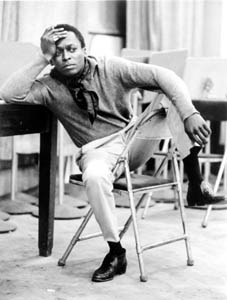
A LOVE SUPREME

I am now blogging at a new blog: erdman31.com

If you post comments here at Theos Project, please know that I will respond and engage your thoughts in a timely manner.

Monday, April 20, 2009

The Hermeneutic of Doubt


I finally had a chance to see Doubt last night with my good friend Tamie, and I was quite intrigued.

The plot: A strict, curmudgeon principal at a Catholic elementary and middle school (Meryl Streep, in a role I think she was born to play!) confronts the priest (Philip Seymour Hoffman) with an allegation of an inappropriate relationship with one of the boys. The principal is tough and persistent, and in the end the priest resigns his position and leaves the church/school.

But here's the thing: the film leaves us with no indication as to who is right and who is wrong. That is, there is no resolution as to whether or not the priest had an inappropriate relationship with the boy. We are only left with...well.....doubt.

The priest affirms his innocence and never wavers. The principal never gives an inch, she has an iron will. There is never hard evidence to suggest which person's interpretation is correct. There is no scene of the film that would suggest whether or not the priest is guilty.

The film is something of a "Rorschach test." That is, the response of the interpreter is more significant than the film. The film has no "true meaning," in itself, and doesn't press an interpretation on the audience.

Take note, friends. It is not just another "open" film, in good postmodern style. Rather, the individual (or collective) viewer's response at each stage in the film is telling for their particular disposition to the themes, controversies, subjects, and characters of the film. While this is certainly true of all films, literature, works of art, etc., Doubt seems to deliberately set itself up in a Rorschchian style. In this way, I found it more psychologically interesting than most postmodern films that play on differences of perspective: Doubt seems to lend itself to both analysis of perspective but also one's own psychological disposition.

For example, how we interpret and psychologically relate to child abuse is a critical influence on how we will interpret the plot and characters, potentially surfacing issues related to how we posture ourselves toward predators or alleged predators. Also, one's perception of change and the rule of law influences our interpretation of which character is more sympathetic.

Additionally, and perhaps most interesting to me, there is the very intriguing question of how we process events and how we look for truth. The principal is operating solely on the certainty that she generates from her will. There is a certain kinesthetic energy that she forces into her process of determining what is true and false. She believes that the priest is guilty. There is no doubt. This will certainly be viewed with suspicion by most Westerners, who (like myself) tend to look at "evidence" as being a greater support for processing the world and determining truth and falsity. I imagine that the principal's "certainty of the will" will be viewed with suspicion by most, but certainly not all.

The hermeneutic of Doubt intrigued me. I look forward to multiple viewings in the future. The religious themes of faith and doubt are also woven into the narrative in a thoughtful and intelligent manner, providing plenty of food for thought and topics for discussion.

Wednesday, April 15, 2009

Tea Party

I think these tea parties are idiotic.

In short, it gives people the illusion that they are doing something, when in fact they are just being ignored.

This whole idea that people should protest and shout about how unhappy they are just seems like a completely ineffective way to bring about substantial change. I apply this to protests of all kinds that happen these days. It's nothing like the civil rights protests of the 1960's, for example, where the violence perpetrated on the protesters made the nation take stock of itself. Today's protests are a way to avoid any intellectual or moral responsibility by substituting dialog and real action with a "protest march" that is little more than a gripefest with other malcontents who feel equally unhappy. It isn't revolutionary and it does nothing to reform.

I left a similar comment at our local Tea Party website:
http://kos9-12project.blogspot.com/2009/04/on-april-15th-be-apart-of-kosciusko.html

If you want to see it, you should probably hurry, b/c I'm sure it will be pulled soon.

Sunday, April 05, 2009

Freedom and community

"...I think the majority of musicians are interested in truth....There is never any end. There are always new sounds to imagine; new feelings to get at. And always, there is the need to keep purifying these feelings and sounds so that we can really see what we've discovered in its pure state. So that we can see more and more clearly what we are. In that way, we can give to those who listen the essence, the best of what we are. But to do that at each stage, we have to keep on cleaning the mirror...." - John Coltrane

One of the current topics of discussion here at Theos Project is freedom. As heirs to the Enlightenment and various popular versions of existentialism, we tend to think of freedom as the brute freedom of the individual: “I can do whatever-the-hell I want.” In the political sense, modern ideas of freedom emphasize emancipation--to be
free to self-govern, emancipation is tied to individual liberty. In the moral realm, modern freedom means autonomy--the ability to freely choose as a responsible moral being. Implicit in this free moral choice is that one makes their own ethical decisions. Contrary to popular belief, moral relativism is something of a uniquely modern idea, it was on the scene long before the so-called postmodern era. Kant's moral imperative ("act only according to that maxim that you would at the same time will that it would become a moral law") attempted to bring together our individual moral autonomy and some sense of moral law, but moral autonomy was still at the core of Kant's ethics.

However, on the heels of modernity, we still have inherited a prejudice to conceive of freedom as autonomy or emancipation. Even in this "post" modern era, we still have this rather modern sense of freedom.

The result of this belief is that we have a ridiculously difficult time bringing together a robust idea of personal/individual freedom together with a strong sense of community and interdependence. This develops within us a spiritual split between freedom and community. For example, freedom is what I want and community is what the others want. If the desires line up, then the two can co-exist; but if I desire one thing and the others desire another, then we feel the tension.

But is it possible to conceive of freedom and community in terms that avoid the dichotomy, that avoid pitting individual and community against each other?

This is our discussion question for the day. It is quite probable, I believe, that this is a question with many different answers.

A good start to the discussion, I think, is to recognize from the beginning that all things are interconnected in a way that is much deeper than many of us realize.

Philosophical Interlude......A few hundred years ago, Rene Descartes believed he could sit around in a room by himself and strip away all of his inherited "prejudices" and get at some foundational truths. Philosophers who followed suit worked under the assumption that we pursue truth in our minds--that we are basically brains/minds who sort through the data of experience to find truth. A few hundred years after Descartes, philosophers like Martin Heidegger and Ludwig Wittgenstein suggested that the reverse is true: as human beings we are first and foremost embedded in a given context. That is, our context is not something to strip away in order to find truth; in fact, truth is always only possible within context. This is not merely the tabula rasa, or "black slate" idea--that we our minds are a blank slate onto which our experiences are inscribed and then our rational capacity sorts it all out. For John Locke, we are still self-determining, autonomous beings because our rational capacities allow us to organize the experiences written on our tabula rasa. Even though Locke recognized a greater role for experience, he remained convinced that the rational capacity within the mind was foundational, in some sense, for determining our self-hood. This rational capacity allowed us to get at the truth and to then make free decisions. However, "freedom" remained an activity of the self, and as such the tension remained between self and others, the individual and the community.

For Heidegger/Wittgenstein and many other philosophers since, there is something more basic, more primordial, than mind and reason. To be human is to be contextual, in a more holistic way. Every sense of who I am is in relation to other people around me, my social context, and even the physical nature of the world I inhabit. Hence, there is not "pure truth" that transcends our contextual-ness. There is no "self" of the mind. There is no I without a relation to my context.

There are many ways to make the same point: we cannot exist without others--the others are a part of me and I am a part of the others. Interdependence is a matter of survival and brute autonomy, complete independence, and pure emancipation is an illusion. (For a well-written perspective on this see Tamie's Freedom in Light of Interdependence post.)

Freedom and interconnectedness, by way of illustration

So, what does it look like to actually hold together freedom and community? What does it look like to think in new ways about freedom? Does our nature as contextual beings prove that "freedom" is just an illusion? Are there ways to think about freedom that take into account our radical interconnectedness and interdependence?

Rather than describe how freedom and interconnectedness might relate to each other, perhaps it is most illuminating to show it in action. And for this, I turn to John Coltrane.


Permalink: http://www.dailymotion.com/video/x59u3_john-coltrane-my-favorite-things-19_music

In the Coltrane Quartet, each musician is attempting to express his own unique gifts and individuality. We might say that each person is pursuing personal creativity and individual freedom. And yet at the same time, the context for freedom and creativity occurs within the group. All personal creativity must reference the whole sound. As such, there is no such thing as autonomous creativity, and yet at the same time there is not sense of conformity, no rule of law that confines an individual to perform a certain way. Each musician free, but the exercise of freedom occurs in response to the sound that the group produces.

To be present………Notice that the deep presence of each musician results in different forms of emotion--serenity and calm, intensity to the point of pain, and sometimes just joy. Each musician expresses his freedom in his own way, yet all are interconnected. Sometimes the group plays together, while at other times individuals solo while the rest of the group just listens and learns. Each musician is “saying something” about themselves and also expressing themselves as a group. They are present to the moment and bring their whole selves.

To believe……What if we said that each member of the ensemble is a "believer": that is, they believe in the truth and potentiality of the group. They believe in the whole and they believe in themselves as creative and free individuals. Each believer is committed to producing something true. Thus, the commitment of each believer is critical, because each believer makes a critical difference to the sound of the whole. The ensemble can only be truthful and creative in the whole if each believer believes in their own creativity. Each musician in the Coltrane ensemble has dedicated hours of solitary practice, not to "master" the instrument or to learn a part, but to learn to listen to the instrument and to understand their own sound, to cultivate the truth of their art.

To listen……..Each believer is not only listening to their own voice and expressing their own freedom, but they also realize that their personal freedom is the result of an ensemble that is free. As such, each believer sets the others free, and they seek to cultivate and open up a space for free play. To do this, they must listen attentively to the sounds of the others. Even more, they must listen to the sound that the group creates as a collective whole. There must be freedom to create, to develop a uniqueness of sound, as an individual and as a collective. Without uniqueness of sound, there is no ensemble.

To develop a symbiotic relationship…….I can NOT be a believer who contributes to the ensemble, unless I am free and truthful. Conversely, I can NOT be free to play, unless I have other members of the ensemble. (I can play, but I am limited.) As such, there is risk: we are talking in a very real (and life-threatening) way of the possibility of failing to discover and cultivate extreme potentiality. If a group of musicians is playing a written score, then each musician learns the part and fills in a role. This is perhaps an illustration of organized religion or law-based spirituality: one only fits into the group if one is willing to play a particular designated part. But this is not the case for Coltrane. The melody only provides a starting point for improvisation. As such, the sound is unique, but this unique creativity is dependent on interdependence. The relationship is symbiotic, the success of each is dependent on the others.

To engage new potentiality…...When the musicians play as a collective whole, they must reference each other, and if the commitment of each musician is to creativity and freedom, the results are non predictable. Each references the others. And as such, there are new possibilities that open up to each individual. Playing without the others is certainly a context for freedom, but the possibilities are limited….limited, and actually can be a bit boring. When the ensemble plays, each musician—each believer—can encounter new sounds and engage new possibilities.

This is the point, I think, at which we begin to see how freedom and interdependence might relate in a way that actually cultivates and grows itself. Each musician or believer must be free and truthful with themselves, but this freedom is only made possible because other believers are equally committed to freedom. As such, interdependence is no longer a barrier to freedom, it can actually become the basis and foundation for a freedom that cannot be known by the autonomous individual. A musician playing on his own has freedom, but this freedom is limited. When the ensemble begins to play, new possibilities open up.

Lastly, and perhaps most importantly, when the collective whole of the ensemble is committed to creativity, the end result is unexpected. No one can predict, in advance, what will be created when individual creativity expresses itself in the collective of the ensemble.

In relation to the quest for truth or spiritual freedom, I suggest that no one can know in advance what will be created when individual freedom expresses itself in the collective freedom of the life of the community. Like the ensemble, they just have to start playing. Each believer expresses herself in relation to the whole, using the community as the starting point for freedom of expression. Interdependence becomes the possibility for reaching truth and potentiality that would remain impossible to those who construe freedom as individual autonomy.

It is impossible to quantify "how" it happens or to predict in advance what will be.....for Coltrane, his music was always deeply spiritual...spiritual, joyful, troubled, complex, dark, loving, simple, and beautiful. The pursuit of truth was ongoing. Creativity and freedom was found within community and interdependence, not in spite of it.

It is rare that we truly push ourselves to be both truthful and free, rare that we open up these spaces where the collective of believers—those who seek to be open and truthful—can express something.

The world needs more jazz ensembles. The faithful who play together with the faithless. The atheist, the theist, and the a/theist. All together as believers. Believers in truth and freedom, creativity and righteousness.

Friday, March 27, 2009

Myself and the others

Let's try this one on for size: The more I become myself, the more I become like others, although the reverse is not necessarily the case.

Friday, March 20, 2009

Freedom and Grace

Freedom and grace seem to me to be two of the most difficult things for human beings to live with.

Wednesday, March 18, 2009

Spiritually Homeless

Picking up in the middle of a recent conversation on my front porch, with a lady from down the street:
Her: ....Oh, and just what is your association with Grace College/Seminary?
Me: In 2000 I graduated from the college with an accounting and business degree and last May I graduated from the Seminary with a Master's degree in theology.
Her: Oh, really. Where do you go to church?
Me: I don't
Her: Really????
[suspicious look, eyebrow raised]
Me: Uhm. Well. I'm exploring what faith looks like outside of institutional Christianity.
Her: Do you think that's biblical.
Me: Hhhmmmm.....yes, I do, actually.
Her: Are you looking for a home church?
Me: No.
Her: I see. You know, I have a good author to recommend to you....he really helps get at hidden sins that hold us back in life....

Oh, and in the above dialog, you can fill in an awkward pause after just about each of my responses.

Ever since I terminated my church attendance a year or two ago, I have felt a certain internal pressure to "belong" to something that, while perhaps not a "church" in the traditional sense, is at least something of the church variety. That way, I can avoid the awkward kinds of dialogs listed above and be able to have something substantial to reply to family and friends: I may not be doing the institutional thing, but I've got something else that's just as good!

In this post, however, I hereby officially resign any concern with having to replace traditional church with something that is sort-of-churchy. This is probably of no major surprise to those of you who follow this blog and have read my posts. (See, most recently, Merging and Submerging and Pay-as-you-go Church.)

My thought here is that perhaps "the church" is best looked at as a way of life rather than a membership to a particular group, an inclusive embrace of the world rather than an exclusive commitment to a particular organization/institution or even a specific group.

I want to ask the question: What happens if I have no "core" membership into an exclusive group?

I wanted to write this post to discuss the pros and cons of simply leaving traditional church and not replacing it with anything. In order to do so, I thought, "Hhhmmmm....Jon, you do a few of the things that Christians and churches do. So, perhaps you should list these things for your blogging audience." Good suggestion, I thought. And then as I compiled my list, an intriguing thought came to my mind: I'm not entirely sure that I have time for church, because I'm busy enough doing things that churches usually do. I'm sure that sounds a bit condescending, thought I don't mean it to be.

Here is my list:

a) I have a small group of friends with whom I am very relationally close. For most of us, our faith is an important aspect of our lives, in one way or another. However, we do not meet for a traditional "service." We have no organized, regular meetings scheduled. Most are one-on-one or small group get togethers that we initiate in order to be involved with each other's lives.
b) I meet once a week with a friend for theological discussion. (Currently we are discussing Romans.)
c) I am considering attending liturgical services (only once in a while!) with my friend Tamie when she moves to Indiana.
d) I discuss spiritual issues with my friends, neighbors, and family in many different, informal settings.
e) I blog.....and as we have discussed, blogs are a form of communal gathering, albeit of the virtual variety. (And, yes, I know, I have been a very bad blogger this year, in 2009!)
f) I meet once every two weeks with some Pastor friends.....we are all kind of missionaries to each other: I am trying to help them see the errors of their institutional ways and they are trying to bring me back into the fold of the Christian sheep.
g) Many of the folks listed above know me very well and provide a sense of caring for my soul, and visa-versa

So, what are the ramifications of just dropping, altogether, the idea of "belonging" to any particular fellowship/church/church group?

A few potential positive outcomes:

First, it would seem to more closely resemble the spirit of the early Acts church, where people of faith just kind of got together at each other's houses to eat and talk about what was happnen' with the whole Jesus thing. There's no indication that the same groups met at each gathering (like the contemporary "small group" ministries or "house churches") or that they had to start a particular ministry for this purpose.

Second, and a follow up to the first: allowing fellowship to be spontaneous seems to relieve the pressure to maintain an organization. This means that organizations/institutions cease when the S/spirit ceases.

The third positive feature that I can see is that if we scrap the church thing altogether, it seems as though hierarchy is kept at a minimum. With institutions/organizations comes hierarchy. That makes the power dynamic more of a factor than it should be. Power is always at work, of course, but within institutions/organizations the power plays are normative, regulative, and from my experience they suck the freedom and life out of a person.

How about objections to my eclectic approach?

First, and most damning I think, is that this approach seems to facilitate fragmentation. It is difficult in America to have a whole self. Our self gets divided between a lot of different areas, making it quite easy to hide ourselves or to just allow ourselves to become neglected. There is work self, home self, hang-with-the-friends self, go-to-church self, online self, and sometimes several different versions of the self within each of the above. When one combines this with our fast-paced American lifestyle, the result is a psycho-spiritual multiple personality disorder and a lack of any sense of wholeness.

I don't know that belonging to one, core church group really solves this problem, though, quite honestly. This fragmentation is complex and related to the system within which we operate. It is one of the major human challenges we face as Americans. However, while a church probably won't fix this and often makes the matter worse, the fact is that it is difficult to live holistically on one's own. Community can help.

The other objection that comes to my mind is quite difficult to articulate. It comes from the sense and general feeling that we should have some sort of religious core group. Without it, we just get the feeling (many of us) that we lack a center or a foundation. This feeling is difficult to describe or define. It starts, perhaps, with those of us that are used to attending services every week and having a religious place and space that is our own. We belong to a group, and the presence of such a group provides a psychological stability to our lives. It becomes an identity thing. Leaving the church opens a void.

But what if we embraced the void? What if we gave up our foundationalist instinct to find a center and just let be?

I think that if we could do so, then we would be forced to live faith without being able to fall back on an institution/organization/membership for security. We could then allow sacred spaces to open up naturally and organically as the spirit moves.

Most importantly, without a center or foundation, the us-versus-them exclusivistic attitude becomes more difficult to maintain. "Having a home church" means that one is "in," right? And those who don't are out. What if we were all out? What if we were all in? What if that didn't matter so much, anymore?

NOT having a church makes one live faith each moment for the moment, it does not allow for a psychological religious stabilizer.

According to some, the American institutional church and its related educational establishments may be on the verge of complete collapse in the upcoming decades. No one can tell for certain, of course. But statistics are pointing in this direction, and many people of faith are just finding that the churches lack depth and soul. I don't say this to create another us-versus-them dynamic; I don't say this because I think all churches suck. I think churches do great things and have done great things. Seriously. I mean that. However, I am just finding spiritual homelessness to be the way that I roll these days, and I'm wondering if that doesn't have a lot of advantages. And I am wondering if there are others who do the same.....and I am wondering if there are others who should do the same.

Churches and Christian institutions tend to settle, and when they settle they tend to become complacent. Doesn't have to be that way, but that's just an observation that seems to hold in many cases. It seems that churches and Christian institutions established themselves in the 20th century as a place to settle and protect the faith. The spiritually homeless may find themselves a bit unsettled, but perhaps this only makes it all the more necessary for us to make faith real at all moments.

Don't get me wrong, I still believe in working toward communities of freedom, as I have previously said: As human beings, we cannot flourish without each other, without being in community, but we cannot grow in community unless that same community sets us free. (Fellowship and the Freedom of the Self) It is a paradoxical situation. But perhaps the spiritual drifters like myself can be more open to allowing sacred spaces of freedom to open up where they may be least expected. Isn't this what Jesus did, at least to some degree?? What does it mean that "this world is not our home"? Often, church and religion seem to be investing much of their time, money, and energy into making a home for themselves. Is this the calling? Is this the Gospel that transforms?

So, in this post, I am declaring myself to be spiritually homeless, and I think that there is alot of potential for this to be a good thing. Furthermore, I am hereby giving up my sense--that nagging whisper that's kind of always in the back of my mind--that I need to be "doing something" in an established group.

Tuesday, February 17, 2009

Freedom to imitate

"When people are free to do as they please, they usually imitate each other."

Eric Hoffer
The Passionate State Of Mind, and Other Aphorisms

This quote fits nicely into our recent discussion on mimetic desire.

Wednesday, February 04, 2009

Faces in the Crowd

The Theos Project gives a ten gun salute to this 19th century thinker, poet, and song writer.

Currently accepting speculations as to the identity of this brilliant intellectual.


What Does It All Mean?


Talk about deconstructing a digital demographic.....

Tuesday, January 27, 2009

Karen Armstrong in conversation

So, if religion is not about believing things, what is it about? What I’ve found is that, across the board, religion is about behaving differently. Instead of deciding whether or not you believe in God, first you do something, you behave in a committed way, and then you begin to understand the truths of religion. And religious doctrines are meant to be summons to action: you only understand them when you put them into practice. Karen Armstrong on SOF


Theology is poetry


I suggest we discuss the above conversation. Karen Armstrong is a prolific author and articulate speaker on comparative religion. She describes herself as "a freelance monotheist," and believes that "all the great traditions are saying the same thing in much the same way, despite their surface differences." She centers religion on compassion and ethics: "I say that religion isn’t about believing things. It's about what you do. It’s ethical alchemy. It’s about behaving in a way that changes you, that gives you intimations of holiness and sacredness.” [see wiki article]

What did I like, you ask?

I like Armstrong's comments about the fact that the Bible can't answer your questions. I think Armstrong rightly puts her finger on the fact that many fundamentalists and atheists have both erred in expecting the Bible to be a book of answers. Hence, either the Bible has life's answers (fundamentalist) or it doesn't (atheists). Of course, that's painting with rather broad strokes. (Not all atheists are reacting against fundamentalism, for example.)

Armstrong suggests that the Bible is "like weights in a gym" that we "struggle with." I like that. It reminds me when the book of Hebrews speaks of the "mature" approach to "the Word." The mature "by constant use have learned to distinguish good and evil." The idea in Hebrews (chapter four, is it?) seems to be of training, not by learning rules of behavior or true propositions that one applies to life; rather, I think the idea is that interaction with "the Word" (which probably should not be restricted to the written text) should result in a certain transformative effect that carries over into the lived life.

Armstrong talked about how the Bible can be (for many) an answer book that "with the click of a mouse the answers come up."

Also......what did I like....let me see here....

Okay, I really really appreciated her thoughts that the religious should develop a "counter narrative" to that of the "extremists." I like the positive movement. Armstrong talks about "an exegetical effort." In other words, engage the text.....deeply.....rigorously. I like it. Armstrong doesn't want to shy away from the text. For example, she suggests that there is "far more violence in the Bible than in the Koran," but that this is not something that a Christian should hide from.

On the negative side.....

I am always a bit cautious of those who suggest that all religions are generally the same, with only surface differences. I do appreciate and sympathize with the perspective. Extremists throughout history have exaggerated differences and exploited many. However, there are differences in religions, and the degree to which a religion differs depends largely on what one calls the "core," "essence," or "fundamentals" of the religion. And what one calls the essence of a religion is largely a matter of interpretation. In other words, religions like Isalm or Christianity have harsh words for non-believers or infidels, and as such it is easy to see how one could locate the essence of the religion in an us-versus-them frame of mind. I personally think that this is a mistake, but it is a matter of emphasis, isn't it? A matter of interpretation that has to do not just with the text or the tradition, but also with the interpreter's own vision for the world.

Thursday, January 15, 2009

Closer to God


http://www.youtube.com/watch?v=z7cQkg1ZAZs


You're the only tie that binds my heart
Away from you I'm falling apart
We need to be closer than we are

Sanctus Real
Closer
Fight the Tide

I'm not alright, I'm broken inside
Broken inside
And all I go through, it leads me to you
Leads me to you
Closer to you
Closer to you
Closer to you

I'm not alright I'm broken inside
Broken inside
I'm broken inside, Broken inside
And all I go through leads me to you
Leads me to you

I'm not alright, I'm not alright
I'm not alright ... that's why I need you.

Sanctus Real
I'm not alright
The Face of Love


One of the lessons taught me during my time in Christian evangelical circles was that one needed to pursue God, to be "close to God." Being close to God meant peace; being close to God meant that you were okay; the presence of God was to be pursued, the absence of God, eschewed.

But....does God really want to be close to us? I ask a serious question here.

Should we exist in a relentless pursuit of God's presence in our lives? Again, though many Christians take this to be an unquestionable axiom, I am raising the question, and I am doing so not simply for sake of argument.

I have previously posted on Peter Rollins, a/theology, and other explorations of negative theology. The idea is basically that I question the assumption (held almost without question in most evangelical circles) that the presence of God should be privileged over his absence....I oppose this assumption, at least, as some sweeping, categorical formula....what if God truly desires to be absent from us for a while? Would that be okay? What if there is nothing broken or wrong with us when God is absent? What if, in fact, such absence were a positive aspect of spiritual formation?

In a very real way, we can never escape the presence of God because he always surrounds us. God is really unknowable, truly transcendent, and yet She/He surrounds us at all times: "'For in him we live and move and have our being.'"

It may very well be that the presence of God heals and repairs....and it may very well be that the absence of God breaks and damages us....but I don't think these things hold absolutely. There is surely something wrong with faith when it obsesses about the presence of God. Exploring the absence of God is a means of knowing God that cannot be understood if God is present. When those we love are absent, our love grows in a unique way, love grows in the absence, and in the absence we learn more about ourselves and our relation to those we love; we learn more about the love itself; we desire the presence of the absent one; we cultivate an isolated and present-less desire.

Absence can be necessary also from the perspective of distance in order to understand our doubts and fears of God. When dealing with his people at Mt. Sinai, God appeared as a God of distance--to be feared and respected. While I'm not sure I understand the logic of such a move, I raise the issue because God himself seems to create distance from those he loves. Similarly, I think there are times when we need distance from God simply to attempt to reckon with inner doubt and faithlessness.

In short, I think that cultivating the absence of God seems to be invaluable in knowing God: we know God in presence and we know God in absence. Theologies and spiritual teachings that perpetuate God's presence as the supreme experience of spirituality feels very unhealthy to me, at this point in my life.

Thoughts?

When my love was away,
Full three days were not sped,
I caught my fancy astray
Thinking if she were dead,

And I alone, alone:
It seem'd in my misery
In all the world was none
Ever so lone as I.

I wept; but it did not shame
Nor comfort my heart: away
I rode as I might, and came
To my love at close of day.

The sight of her still'd my fears,
My fairest-hearted love:
And yet in her eyes were tears:
Which when I question'd of,

'O now thou art come,' she cried,
''Tis fled: but I thought to-day
I never could here abide,
If thou wert longer away.'

Absence by Robert Bridges

Wednesday, January 07, 2009

Gnostic

In this post, I will give a review of a bit of my research into Gnosticism. This is a very long post (which readers of my blog are quite accustomed to!), so in order to keep in intelligible, I will work from the simple to the complex. I will begin by describing Gnosticism in a summary fashion and then work out the details in the rest of the post.

I want to clarify that the "Gnosticism" I am working out is of the sort that developed and was practiced in the early centuries B.C.E. This would include the varieties of Gnosticism that influenced (and were influenced by) the early church.

Gnosticism in a nutshell

The first thing I note is that "gnosticism" is not a very diverse category and not easily defined. So, while we list "common" characteristics of gnosticism, there will be many exceptions based on which particular group one is referring. This is true of any description of a religious or philosophical movement, but it is particularly the case for Gnosticism.

Much of the theological speculation of religions throughout the ages are centered on figuring out how to account for the brokenness of the world. Well, the answer for the ancient Gnostics was to simply say that the whole damned thing was helplessly evil, by its very nature. Gnostics developed a very radical dualism between the entire material world and the spiritual realm, and they relegated all of the material world as "evil." Often this meant developing two or more deities to account for the creation of the perfect, spiritual realm and the fallen, material world. "The world is the product of a divine tragedy, a disharmony in the realm of God, a baleful destiny in which man is entangled and from which he must be set free." (Rudolph, Gnosis, 66)

The only hope is to access the "divine spark" that is within. Connecting with the internal divinity was the process of redemption whereby one could connect with the Unknown God. This process was "gnosis," an esoteric form of knowledge that connected one with their true, spiritual self and with the Unknown God.

Hence, in Gnosticism one typically finds the most radical of dualisms: the entirety of the world and all experiences are evil. One does not (as in orthodox and mystical versions of Christianity) purify one's self from personal/individual sin via a process of connecting with God. The state of affairs is more hopeless. One must completely transcend the world and one day hope that the divine human soul will completely leave the world and transcend into the purity of the spiritual realm. The material world and the material body is a prison of the soul. This is a dualism more revolutionary than ancient Platonism or Christianity, both of whom preserved dualistic notions as central to their belief systems and practices.

Redemption and salvation is only found in death. In death, the divine soul is free to completely leave behind the evil of the material world and the material body and to ascend to the sphere of purity.

A parasitic movement

The Gnostic faith was a parasitic movement. Gnostic movements could easily spring up within any number of religious contexts, Christian or Jewish, or even within certain philosophical frameworks. But one of the things that characterized the Gnostic was that they discovered new, secret, unique, or deeper meanings within the texts and traditions of the already established movements of which they were a part. Says Perkins,

There is no simple account of the origins of Gnosticism. Traditions of esoteric and pseudo-scientific interpretation had been developing in different quarters throughout the Hellenistic period. The original interpretations may even have been more sophisticated than the versions we find embedded in mythological stories. By the time we find them in Gnostic writers, we are not dealing with direct readings of the Bible but established Gnostic traditions which are being reworked and reinterpreted . The Gnostics never take the further step achieved by both Judaism and Christianity—that of canonizing certain written embodiments of their tradition as Sacred Scripture.1


Hence, for these Gnostic traditions, “There was no gnostic ‘church’ or normative theology, no gnostic rule of faith nor any dogma of exclusive importance.”2 Also, “There was no gnostic canon of scripture, unless it was the ‘holy scriptures’ of other religions, like the Bible or Homer, which were employed and interpreted for the purpose of authorizing the gnostics’ own teachings.”3 Individuals of a Gnostic frame of mind were content merely to borrow the texts from an existing religious establishment and impress upon them deeper meaning/significance—a meaning that may have been lost somewhere along the way:

A further peculiarity of the gnostic tradition…lies in the fact that it frequently draws its material from the most varied existing traditions, attaches itself to it, and at the same time sets it in a new frame by which this material takes on a new character and a completely new significance. Gnosticism strictly speaking has no tradition of its own but only a borrowed one. Its mythology is a tradition consciously created from alien material, which it has appropriated to match its own basic conception. Considered in its own light, however, it is for Gnosticism a further confirmation of its truth, which it often traces back to a primal revelation, i.e. derives from primitive times; the knowledge of it was only temporarily extinguished or concealed.4


Gnosticism, then, is a “borrowed” tradition. Tradition is unimportant. What is important is only “gnosis” or “knowledge,” not a tradition or a text.

Gnostic characteristics in greater detail

In his classic text, Gnosis, Kurt Rudolph outlines seven principle areas that characterize the distinctives of the Gnostic movements: Gnosis, divine spark (upward, downward movement), Dualism, Cosmogony/Cosmology, Soteriology, Eschatology, Community/Cult.5 It is critical to stress and to reiterate the fact that the term “Gnostic” is a general label applied to a diverse number of individuals and communities who shared similar commonalities. This was not a monolithic movement and the following generalizations are subject, in many cases, to counterexample. As such, some scholars would even suggest that the term “Gnostic” should be done away with completely.6 Yet with these qualifications in mind it will still be helpful to use the term “Gnostic” and examine some of the general characteristics.

“Gnosticism” is a word often used to describe the phenomena and various movements of the second century.7 The use of “Gnosticism” can thus be distinguished from “gnosis,” which derives from the Greek meaning knowledge or understanding: “It is a knowledge given by revelation, which has been made available only to the elect who are capable of receiving it, and therefore has an esoteric character.”8 Gnosis is the first of Rudolph’s categories that we will analyze along with brief comment on the Gnostic conception of the divine.

Perkins describes gnosis as follows: “For the Gnostic, both God’s essence and his existence are unknown. Only gnosis overcomes the situation…These Gnostics reject the stable vision of God which the philosophic mind claims to attain.”9

Gnosis connects with the divine, and this conception of divinity is transcendent in a way that was very radical for the religious milieu of ancient religion. Perkins comments:

To a degree unparalleled by their pagan or Christian counterparts, Gnostic thinkers emphasized the radical transcendence and unknowability of the highest God. Such radical transcendence is founded on a discontinuity between God and the cosmos in which human beings find themselves....10 For the Gnostic, then, contact with the divine is mediated through the primordial revelation or through the rituals of the cult and not through its association with particular, contemporary teachers, seers or holy men.11


Perkins describes this transcendence as “radical” and unparalleled. Rudolph describes this perspective as “revolutionary.” For their contemporary counterparts, access to gods or the deity could be a relatively easy thing. But for the Gnostic, there was a gap and an enormous gulf that needed to be crossed. This, of course, is the role of gnosis. Rudolph comments further:

The gnostic conception of God is dictated by a contrast to all previously existing conceptions and so has a thoroughly revolutionary character. Certainly the terminology is indebted to contemporary philosophy…but the underlying world-denying tone cannot be mistaken. The counterpart to this highest being who can be described only in negative terms, the “unknown God”, is the revelation of his secret through intermediate beings of the elect, who are thereby enabled to attain to the “knowledge” of the (hitherto) unknown one. The gnostic idea of God is therefore not only the product of a dualism hostile to the world, but it is at the same time also a consequence of the esoteric conception of knowledge: “Gnosis” mediates the secret and leads men out of their ignorance concerning the true God.12


This leads naturally into two other aspects that pervade much of gnostic thought: that of the divine spark and a radical dualism. Within humankind is a divine spark that must be awakened or recovered. There is an upward/downward movement or structure here: the divine element and the fallen and perilous situation of man.

The world is the product of a divine tragedy, a disharmony in the realm of God, a baleful destiny in which man is entangled and from which he must be set free....13 Anthropology also is in Gnosis completely dominated by dualism. Here too a sharp line of distinction separates the bodily and psychic from the spiritual part of man. The latter is indeed even reduced to the “unworldly self”, the original divine constituent or “spark” in man which can be activated only through “knowledge” (gnosis), which is the pledge of redemption.14


There is a distinction, then, between the body and spiritual components of the human self. In some Gnostic conceptions there is a created dualism between the divine and the material. In other instances there is a gradual, downward movement from the divine to the darker, physical world of ignorance.15

But were not Platonic and other philosophical and religious systems of the day dualistic? How were the various Gnostic concepts of dualism different from Platonism. Rudolph is instructive in exploring this question. His comment here distinguishes the Gnostic dualism with Iranian Zoroastrian dualism, Platonic dualism, and Indian dualism by the “anti-cosmic” character of Gnostic dualism:

The gnostic dualism is distinguished from these above all in the one essential point, that it is “anti-cosmic”; that is, its conception includes an unequivocally negative evaluation of the visible world together with its creator; it ranks as a kingdom of evil and of darkness. The identification of “evil” and “matter”, which is not to be found in Iranian and Zoroastrian thought, occurs in Gnosis as a fundamental conception. In Greek thought also--apart from certain Orphic teachings, which however are of uncertain date--there is no such anticosmic development of the dualism of spirit and body. The Greek conception is unmistakably “procosmic”, and no less a person than Plotinus (3rd century A.D.), the leading figure of the late or Neoplatonism, defended this position over against the gnostic depreciation of the cosmos.16


Hence there is a moral element that is attached to the Gnostic dualism to be contrasted with philosophical dualistic notions on the contemporary scene. This is what Rudolph calls the anti-cosmic nature of the Gnostic dualism.

Although this dualism has a definite moral quality an important qualification must be made. Rudolph notes, “It should however be made clear that the dualism of these systems is to be seen first of all in a distinction between God and the Creator or between God and the world, not in that between God and the devil.”17 So, although there may be a moral dualism, good vs. evil, God vs. Devil, etc., for the Gnostic the dualism is first and foremost an ontological distinction between the divine/spiritual and material/physical world. Humanity is material, but within him/her resides the divine spark, which must be awakened.

The above dualism pervades Gnostic thought. We take note of it again as we continue on to Rudolph’s next categories: that of cosmogony/cosmology and anthropogony/anthropology:

The heart of the matter is that man is subordinated to the earthly sphere and hence to its powers only in part, namely in his physical existence; in another part, admittedly only a small one, he belongs to the supramundane spiritual realm. This part of man, often described as the “true” or “inner man”, “spirit” (pneuma), “soul” or “reason” (nous) is, over against the body which encloses him, in the same situation as the whole man over against the cosmos.18


Again, the radical dualism between the spiritual and the material is at work as the Gnostic develops conceptions of the cosmos and of the human being:

The verdict with regard to the earthly and visible world includes on the anthropological level a negative judgment upon the whole of bodily and psychic existence. This earthly material existence, like the world itself, is a product of the Demiurge and correspondingly is a sphere hostile to God, dominated by evil powers which are evident and active in the passions and desires. The psychic part of man is therefore represented as a product of evil powers (above all the planets) and through this man is not only the object but also the subject of the activity of such powers…Valentinus writes in one of his letters that the human heart is the abode of evil spirits who prevent its becoming pure, and instead treat it disgracefully through “unseemly desires”; it is comparable to an inn, which is full of filth and dissolute men.19


The “demiurge” is the fallen or foolish god who created the world contrary to the wishes of the Unknown or Highest God. The catastrophe that is now the physical world was counter-acted by the implanting of the divine spark by the Highest/Unknown God. In some cases Gnostic interpreters find the demiurge at work in the Genesis creation accounts. As Rudolph notes, the material world is a prison:

This view of the relation of man to the world and his imprisonment therein is however only one side. The other side is that which corresponds on the macrocosmic level to the kingdom of the “unknown God”: it is the deep and hidden relation to this higher world. Gnosis described this transcendent level in many images and expressions….In the Greek and Coptic texts the dominant concept is “spirit” (pneuma), in the relevant Hermetica “understanding” (nous), and the oriental or Semitic “soul”…Probably the most appropriate is the expression “spark” (Greek spinthēr), which occurs here and there. “Seed of light” is also found for it. In order to make use of a uniform expression scholars have become accustomed to speak of the “self” or “I”.20


The key to the cosmic dilemma in which mankind follows, then, comes back to gnosis and the divine spark: “The whole gnostic doctrine of redemption centers upon the restoration to its origin of this divine spark of light, which through fatal events has ‘fallen’ into the world, a restoration mythologically represented as an ‘ascent of the soul’.”21

Interestingly, then, the goal of this restoration results in what we might describe as a god-man, which is a somewhat unique conception in the history of religions, and again goes to the originality and revolutionary nature of Gnostic thought:

Behind this idea of the divine “Man”, who dwells both above and in the world, there is an entirely new conception of anthropology…it is not only that the (first) man, i.e. the unknown God, exists before him - the earthly man also, who is his product, is superior to him by reason of his supramundane divine relationship and substance. H. Jonas aptly says “this exaltation of “man” into a supramundane God who – if not the first – is at any rate earlier and more exalted than the Demiurge, is one of the most important aspect of gnostic mythology in the general history of religions…it indicates a new metaphysical status of man in the order of existence…” Behind this is expressed the whole revolutionary spirit of Gnosis in its rejection of the traditional values and ideas of faith…22


This brings us into a specific examination of redemption and soteriology. Rudolph comments from the Book of Thomas:

Gnosis is a religion of redemption…The word “gnosis” itself, as we have seen, has a predominantly soteriological value and in itself already clearly expresses the understanding of redemption. It is the act of self-recognition which introduces the “deliverance” from the situation encountered and guarantees man salvation…In the Book of Thomas (the Contender) Christ says at the very beginning to his “twin brother” Judas Thomas: “Examine yourself and know who you are and how you were and how you shall be…You have already come to knowledge, and you will be called “the one who knows himself”, for he who has not known himself has known nothing. But he who has known himself has already come to knowledge concerning the depth of the All.”23


Simply put, gnosis is redemption. Ignorance is darkness. The light of gnosis initiates one into redemption. However, this redemption, as one might suspect is not fully realized until death:

The process, introduced by “gnosis”, of bringing back the particles of light from darkness into the realm of light can naturally only be realised at death, when the “spirit” or “soul” (as descriptions of the divine particle of light) are separated from the body. Then begins the real liberation to which the gnosis aspires. “But when all the chosen ones lay aside the animal existence (i.e. the body) then will the light withdraw to its true beginning”, it is said the Book of Thomas the Contender....24 The gnostic is already redeemed, although the completion of the redemption is still outstanding. The laying aside of ignorance guarantees his freedom.25


The redemption from the body, then, is critical for the Gnostic, and is contrasted with the Christian idea of redemption from sin and guilt:

The gnostic redemption is a deliverance from the world and the body, not as in Christianity from sin and guilt, mainly in so far as the earthly and corporeal world as such represents the sin into which the divine soul had innocently fallen; through its involvement with the cosmic powers, however, it has become guilty, and it can be freed from this guilt only through insight and at the same time repentance.26


Continuing on this comparison with the Christian notion of redemption it is fascinating to investigate the Gnostic conception of the Christ figure and the role of the Redeemer. Rudolph finds the Gnostic teaching of Christ “remarkable”:

In order to bring the two aspects--the historical and the mythological--under a common denominator, the gnostic theologians brought about a division of the Christian redeemer into two completely separate beings, namely the earthly and transitory Jesus of Nazareth and the heavenly and eternal Christ, and thereby created one of the most remarkable pieces of gnostic teaching. In this way it was possible to appoint the Christian redeemer for several tasks in the gnostic systems.27


I note again the dualism at work within Gnostic thought. If a drastic dichotomy is drawn between the material and spiritual realm, then it follows the doctrine of Christ would split into two separate beings, or that the Christ would only “appear” to be a physical man. This is what we commonly refer to as the heresy of Docetism among Gnostic Christians:

What is meant is the idea widespread among the Christian gnostics that Christ appeared only “in semblance” (docēsei) as a man or in the flesh, and correspondingly neither suffered nor was really crucified. This conception is for Gnosis a necessary inference from its anti-cosmic dualism, according to which a clear devaluation attaches to what is earthly and bodily, and it therefore cannot enter into any serious mingling with what is spiritual and other-worldly.28


Concluding Observations

Ancient Gnosticism was a collection of loosely related beliefs that centered on a radical dualism between the material and immaterial worlds. For the Gnostic, all things material are evil and a part of the fallen world. Each soul contains (or is) a "divine spark" that allows one to connect with the Unknown God. Ultimately, true salvation only occurs when one transcends the evil of the material world and leaves the body behind.

Ancient Gnostic cosmology represents one of many approaches to interpreting the world in its brokenness, to comprehending a reality that seems so incomplete. It is one of many explanations that seek something "more real" or "more perfect" in a world beyond. Platonism and Christianity sought to connect the less perfect, fallen, or less real world with that of the eternal realm. That is, the material world could have degrees of goodness, realness, and perfection, depending on how closely the material world correlated to the immaterial world.

In Christianity, for example, one might try to connect the soul with God in order to become more pure. Or, one might seek to align the bodily actions with God's design or intention for it. Also, one might attempt to align one's morality with the moral law of God.

Though the overlap between Platonism and Christianity is well beyond the scope of this post, I think there are still good questions to consider: to what degree is it beneficial to incorporate dualism into one's theology? What kind of dualisms are healthy, true, world-affirming, and productive? What dualisms seem to be counter-productive, phobic, or escapist? Also, if one believes that God inhabits all of reality ('For in him we live and move and have our being.' As some of your own poets have said, 'We are his offspring.' Acts 17), then we have reason to question whether dualisms of any kind are appropriate. Finally, in good poststructuralist style, one could question whether any dichotomy or dualism can ultimately hold.

Footnotes

1 Perkins, The Gnostic Dialogue: The Early Church and the Crisis of Gnosticism (New York: Paulist Press, 1980), 18-19.
2 Kurt Rudolph, Gnosis, Translation edited by Robert McLachlan Wilson (San Francisco: Harper & Row Publishers, 1983), 53.
3 Ibid, 53.
4 Ibid, 54-55.
5 Rudolph, Gnosis, 1983.
6 See M.A. Williams, Rethinking “Gnosticism” (Princeton University Press, 1996)
7 Nicholas Perrin, “Gnosticism”, in Dictionary for Theological Interpretation of the Bible (ed. Kevin J. Vanhoozer, Grand Rapids: Baker Academics, 2005), 256.
8 Rudolph, Gnosis, 55.
9 Perkins, Gnostic Dialogue, 168.
10 Ibid, 167.
11 Ibid, 11.
12 Rudolph, Gnosis, 65. (emphasis added)
13 Ibid, 66.
14 Ibid, 66.
15 The later view is the view of the majority of the texts, including the Nag Hammadi texts. See Rudolph, Gnosis, 65.
16 Rudolph, Gnosis, 60. (emphasis added)
17 Ibid, 66.
18 Ibid, 70.
19 Ibid, 88.
20 Ibid, 88.
21 Ibid, 91.
22 Ibid, 93.
23 Ibid, 113.
24 Ibid, 115.
25 Ibid, 115.
26 Ibid, 116-17.
27 Ibid, 151.
28 Ibid, 157.