A LOVE SUPREME

I am now blogging at a new blog: erdman31.com

If you post comments here at Theos Project, please know that I will respond and engage your thoughts in a timely manner.
Showing posts with label aletheia. Show all posts

Sunday, July 13, 2008

a/theism

Traditionally, the two terms "theism" and "atheism" mean two opposite extremes. To be a "theist" is to believe in one or more gods. To be an atheist is to deny the existence of any gods; it is to be a disbeliever in any deity. Traditionally, we have defined ourselves with these labels. We say, "I am a theist, so I believe in God." Or we label ourselves a disbeliever in God (or gods). There are other labels, of course. We may prefer the label "agnostic," suggesting that we are suspending our belief in deities: we do not know, or we cannot tell at this point whether or not a God (or gods) exist. Once we have conveniently labeled ourselves, then we can go to work in defending our position against the others and/or show that those who wear the other labels are wrong or mistaken...or perhaps even insane!

To use the term "a/theism" is to begin to think about faith and belief in God (or gods) in a very different way. It is to suggest that the distinction between "atheism" and "theism" is not as simple as it may appear. It is to suggest that elements of belief in God invade the heart and mind of the atheist. Conversely, it is to suggest that elements of atheism and disbelief are active within the soul of the believer.


Writing a postmodern word

The term "a/theism" is something of a postmodern form of writing. It is poststructuralist, to be more precise. Poststructuralism, as you may have guessed, came after and in response to structuralism. Although poststructuralist theorists never defined themselves as such, one name commonly associated as poststructuralist is Jacques Derrida. He questioned the "binary oppositions" of terms that were traditionally formed as strict dichotomies. Terms like "nature" and "culture" and terms like "theism" and "atheism" were traditionally said to exist in opposition, with one term typically dominating or set off against the other. Catherine Belsey has written a nice little booklet on poststructuralism, published by Oxford University Press. It is concise, clear, and yet retains some of the ambiguity inherent in the various poststructuralist positions. Her thoughts are helpful in understanding "binary oppositions":

"Western culture, Derrida argues, depends on binary oppositions. In this respect the structuralists were heirs to 25 centuries of thought. Moreover, these oppositions are always hierarchic. One term is highly valued, the other found wanting. Nature is privileged over culture, just as speech is privileged at the expense of writing. But these terms can never sustain the antithesis on which they depend. The meaning of each depends on the trace of the other that inhabits its definition." [1]

Later, Belsey clarifies by elaborating on the nature/culture dichotomy:

"How do we define nature? Not by reference to flowers and tress, probably, since they are found in parks and can be cultivated, but as wildness, the absence of culture. By reference, in other words, to the term that is excluded by and from nature itself. And yet it is precisely from within culture that we are able to identify nature at all. The one term cannot be excluded from the meaning of the other. Meaning depends on difference." [2]

If meaning depends on difference, then each so-called "opposing" term or viewpoint depends on the other in some way to sustain it and give it meaning and purpose. This leads us to question, then, whether there is a "pure" concept, like natural or cultural. According to Belsey, the conclusion for Derrida, then, is that the oppositions do not hold: "Binary oppositions do not hold, but can always be undone. The trace of otherness in the selfsame lays all oppositions open to deconstruction, leaving no pure or absolute concepts that can be taken as foundational." [3]

To use a term like a/theism is to suggest that although these terms appear to oppose one another, this opposition may in fact be undone. It is to suggest that there are traces of belief within unbelief and traces of unbelief within belief. It is to question whether one can use a label in any absolute sense. In the term a/theism, the use of the backslash between the "a" and the "t" does not allow our eyes to see two separate terms; rather, the two opposing viewpoints are separated and yet are not separated. The two opposing terms become one term and although the distinctions remain, the distinctions are, at the same time, blurred. It suggests that the reader must sort out out the details.


The a/theology of Peter Rollins

I recently posted on Peter Rollins's How (Not) To Speak of God. What was perhaps most interesting to me about Rollins's little book is that he spends a good deal of time discussing his idea of a/theology. As the title of his book implies, Rollins is concerned that we do not overextend our certainty about who God is. Additionally, Rollins finds it important that we apply the same measure of humility to our own understanding of our relationship with/to God. We should acknowledge and explore issues of doubt, uncertainty, unbelief, and darkness. His direction of thinking implies a certain opportunity for "fellowship" (my word, not his) between believers and unbelievers and the ability to open space for dialog that seems to be rare for religions that use binary oppositions to set their beliefs off against the unbelievers.

Says Rollins,

"By combining theism and atheism in an a/theistic discourse we are able to develop a way of thinking that brings the speaker into an awareness of his or her limitations and a space of knowledgeable ignorance. [4]

"What unites Christians is not that we somehow grasp the true meaning (another way of saying 'my meaning') of the painting, as if it can be reduced to a singular message, but that we are seduced and transformed by it.....The deconstructive language being forged here acknowledges itself as a dis-course that sends us off-course--that is, our reflections on God never bring us to God....speaking of God is never speaking of God but only ever speaking about our understanding of God." [5]

For Rollins, doubt is no longer something to avoid or something to be feared. Rather, doubt has real value for faith. In fact, as we will see later, Derrida suggests that without doubt, faith is not faith.

"Doubt provides the context out of which real decision occurs and real love is tested, for love will say 'yes' regardless of uncertainty. A love that requires contracts and absolute assurance in order to act is no love at all. [6]

"The believer ought to acknowledge and even celebrate this dark night of the soul, understanding that this is not a threatening darkness which conceals an enemy but rather is the intimate darkness within which we embrace our faith." [7]

As we continue with Rollins, we find that it is transformation rather than doctrine that testifies of God.

"The point of this a/theology is that it understands that God is testified to in the transformed lives of believers rather than in some abstract doctrinal system." [8]

Here I hit the pause button for a brief moment to question whether or not Rollins has not perhaps set up his own binary opposition. Is "transformation" something that is set against "doctrine"? Has he dichotomized the two concepts, set them against each other, and privileged transformation over doctrine? It is an interesting question. Briefly, I would suggest that creating binary oppositions may be, in some sense, a necessary feature of our existence; however, as Belsey noted above, such binary oppositions can always be undone.

Okay, hitting "play" and resuming the feature film:

"The job of the Church is not to provide an answer--for the answer is not a phrase or doctrine--but rather to help encourage the religious question to arise.

"Central to this approach is the idea that God stands outside our language regimes and cannot be colonized via any power discourse. This means that the Christian faith is extrapolated via a powerless discourse which, at its most evangelical, attempts to create a space in which others can seek for themselves. Consequently, one of the roles of the Church is to provide a sacred space." [9]

I was very intrigued by this last line, and it prompts me to raise the question: have our churches created sacred spaces? Has the body of Christ truly created sacred spaces? For me, this is the key question to ask at the turn of this new century. The body of Christ, I suggest, should no longer rely on "outreach" or "evangelism" or any other program of proselytizing but should instead create sacred spaces for others. Is the body of Christ providing sacred contexts where all lines of inquiry can be explored and examined with care, love, and thoughtfulness? Is the body of Christ creating a sacred space for sacred silence, in the midst of our noise- and image-saturated culture? Or are we merely creating more noise? If we try outshout those who compete for the attention of the 21st century schizoid man, then we will be forced to become simply another propaganda machine trying to sell religion. In this sense, we will merely become one of a long line of manipulating competitors all jockeying for the attention span of humanity.

An a/theistic approach, on the other hand, would appear to step away from the noise and the competition by creating space--sacred space and sacred silence. I tell you the truth, I dream of a community of believers dedicated to creating sacred spaces.

I finish Roolins with what may be taken as something of a summary of his a/theology. I like the analogy that he uses here of a dark glass:

"Our a/theology should be a dark glass which protects God from being spoken, which responds to and returns to the love of God, and which encourages others to seek God for themselves. God is not revealed via our words but rather via the life of the transformed individual." [10]


Derrida on a/theism

Derrida not only wrote theoretically about binary oppositions, he also applies it to religion and speaks directly to the issue of a/theism. For Rollins, doubt is productive. The same is true for Derrida, but Derrida goes farther and suggests that doubt is absolutely necessary for faith, thus further blurring the lines between "belief" and "unbelief".

At youtube, I found an interesting question and answer with Derrida. Someone (who sounds a bit irritated to me), asked Derrida: Why do you say that you "rightly pass for an atheist"? Why do you not just say, "I am an atheist"?

Derrida questions even the very existence of theism if it is not at the same time atheistic. This is very Kierkegaaridan. Says Derrida, "If one does not go as far as possible in the direction of atheism, one does not believe in God." Believers must "run the risk of being radical atheists." Derrida suggests, somewhat controversially, that, "if we do not go as far in the direction of atheism, the belief is naive."

Derrida cites the mystics, that they "pray to someone who does not exist, in the strict metaphysical sense." God is a being beyond being. Believing beyond being is to believe as an atheist. For the mystic, then, this is believing as a nonbeliever.

In conclusion and in answer to the question, Derrida does not define his belief: We cannot say 'I am this and not the other'. Who can confirm, 'I am a believer'? Who can say 'I am an atheist'?"


Conclusion (or, concluding for an opening)

The suggestion of a/theism is not simply that believers experience doubt; it is stronger than merely asserting that believers hold on to faith in the midst of doubt. An a/theistic understanding of faith locates faith as movements between genuine theism and genuine atheism. The faithful do not merely doubt but also truly disbelieve. And conversely, the suggestion is that the staunch atheist also experiences genuine and true belief. The result is obvious: The "faith" of a Christian becomes more difficult (if not impossible) to define. It is not enough to merely intellectually believe in God. Faith becomes more intangible and difficult to pin down.

If we could peer deep inside, is it possible that we could find in the heart of the atheist the remnants of the deepest longing for God? If the unbeliever "suppresses the truth" (Romans 1) of their belief in God, is it possible that the believer suppresses their unbelief in God?

The conclusion of a/theism in its practical outworkings seems to be the opening of space and the opening of dialog. The body of Christ no longer seeks to define itself as opposing the nonbeliever or even as trying to convert the nonbeliever; rather, the body of Christ would focus on creating sacred spaces for openness, thoughtfulness, respect, and authenticity. Creating such sacred spaces seems to me to be reflective of some of the early church communities.


Notes
[1] Catherine Belsey, Poststructuralism: A Very Short Introduction (Oxford: Oxford University Press, 2002), 75.
[2] Ibid., 83.
[3] Ibid., 87.
[4] Peter Rollins, How (Not) to Speak of God (Brewster, MA: Paraclete Press, 2006), 31. I liked Rollins's book. It is an easy read if you are familiar with continental philosophy. If not, then the reading will go a bit slower, but the book (by and large) avoids using technical terms, so the book is still accessible, even to those without an interst in philosophy. Rollins has a website, with a blog he seems to maintain somewhat regularly: http://peterrollins.net
[5] Ibid., 32.
[6] Ibid., 34.
[7] Ibid., 35.
[8] Ibid., 40.
[9] Ibid., 40-41.
[10] Ibid., 42.

Wednesday, May 28, 2008

Contextualized and Relativized Ethics

Kierkegaard said, "Truth becomes untruth in this or that person's mouth." (I'll have to grab the citation information later.)

I like this move by Kierkegaard, even though it runs contrary to many conservative Christian thinkers. For me, however, the point of talking about the importance of relativity and contextualization in ethics is not to provide an opportunity to turn untruth into truth, but to open up the possibility that human beings often turn truth into untruth. In other words, relativizing "good/evil" and "truth/untruth" is about understanding how important context is to the discussion. Could it be that much of our inclination is toward self deception? That as human beings we find security in "truth," when such truth has merely been taken into a context where it can be used for "untruth"?

Ah, perhaps an interesting example from current events:

McClellan has some kind words for Bush, calling him "a man of personal charm, wit and enormous political skill." He writes that the president "did not consciously set out to engage in these destructive practices. But like others before him, he chose to play the Washington game the way he found it, rather than changing the culture as he vowed to do at the outset of his campaign for the presidency." [from Ex-press aide writes Bush misled U.S. on Iraq, citing Scott McClellan]

Wednesday, February 27, 2008

Some truths are best left unsaid

Behold, thou desirest truth in the inward parts: and in the hidden part thou shalt make me to know wisdom. - Psalm 51


Interesting that Lauren believed that she thought that she was a "good person;" yet something inside obviously is not convinced. The host, Mark Wahlberg said to her that "your truth" is that you still have not forgiven yourself. What did he mean by "your truth"?

Many Christian conservatives I have heard cringe at subjective truth statements like "truth for me" or "truth for you" or "your truth." Kierkegaard went straight to subjectivity for truth, not bashful at all to say that subjectivity is truth. Some of the most profound truths are those that remain concealed within us; truths that we are unaware or unconscious of.

People criticize the show Moment of Truth because it exposes people's inner-truth to millions of viewers. But in many respects it is only public exposure that allows us to plum the depths of our identity. Something profound occurs when a person states for public reckoning their actions. There is a new and almost indescribable understanding that opens for us when we engage in public confession. We are forced to identify our actions with ourselves. This is necessary because our conscious minds perpetually work to justify our actions and motivations; this is a pragmatic defense mechanism. After all, who really wants to deal with who they really are. So we smooth it over.

Once you say it and put it in the open, it's a whole new ballgame.

At the conclusion of this Moment of Truth episode, the host, Mark Wahlberg, said that he truly believe some truths are best left unsaid. I disagree. I suggest truth only becomes truth when it is spoken. Until truth is public, it remains amorphous, a hazy fog of self manipulation.

Truth in the inner parts means truth in the outer parts. Even David did not truly understand the truth of his actions until publicly confronted by Nathan.

Wednesday, May 02, 2007

Postmodernism: An immoral and cowardly viewpoint

The following is from J.P. Moreland's 2004 address to the Evangelical Theological Society. Although in this essay Moreland is primarily concerned with the issue of "truth," I think it provides a good idea of the general thought and feeling of many Evangelicals towards postmodernism as a general movement, if one can call it a "movement".
[Taken from: http://www.str.org/site/News2?page=NewsArticle&id=5682]

The astute listener will have already picked up that I am an unrepentant correspondence advocate who eschews the various anti-realist views of truth. In what follows I shall weigh in on the topic first, by sketching out the correspondence theory and the postmodern rejection of it, and second, by identifying five confusions of which I believe postmodern revisionists are guilty. I shall close by warning that not only are postmodern views of truth and knowledge confused, but postmodernism is an immoral and cowardly viewpoint such that persons who love truth and knowledge, especially disciples of the Lord Jesus, should do everything they can to heal the plague that postmodernism has and inevitably does leave.

As a philosophical standpoint, postmodernism is primarily a reinterpretation of what knowledge is and what counts as knowledge. More broadly, it represents a form of cultural relativism about such things as reality, truth, reason, value, linguistic meaning, the self and other notions. On a postmodernist view, there is no such thing as objective reality, truth, value, reason and so forth. All these are social constructions, creations of linguistic practices and, as such, are relative not to individuals, but to social groups that share a narrative.

Postmodernism denies the correspondence theory, claiming that truth is simply a contingent creation of language which expresses customs, emotions, and values embedded in a community’s linguistic practices. For the postmodernist, if one claims to have the truth in the correspondence sense, this assertion is a power move that victimizes those judged not to have the truth.

Faced with such opposition and the pressure it brings, postmodernism is a form of intellectual pacifism that, at the end of the day, recommends backgammon while the barbarians are at the gate. It is the easy, cowardly way out that removes the pressure to engage alternative conceptual schemes, to be different, to risk ridicule, to take a stand outside the gate. But it is precisely as disciples of Christ, even more, as officers in His army, that the pacifist way out is simply not an option. However comforting it may be, postmodernism is the cure that kills the patient, the military strategy that concedes defeat before the first shot is fired, the ideology that undermines its own claims to allegiance. And it is an immoral, coward’s way out that is not worthy of a movement born out of the martyrs’ blood.

Wednesday, January 24, 2007

Greg Koukl on Truth

Greg Koukl from Stand to Reason came to our neck o' the woods tonight. He had a lecture at Grace College and Seminary (I attend the Seminary) on the topic of postmodernism and the emergent/emerging church.

Much of Koukl's presentation was based on truth. He was particularly concerned to defend the correspondence theory of truth. There were a few points at which he came very close to saying that the correspondence theory of truth is the only biblical theory of truth. He didn't actually say that, but came very close. Doug Groothuis, however, states this view quite poignantly in his book Truth Decay that:
"The correspondence view of truth is not simply one of many options for Christians. It is the only biblically and logically grounded view of truth available and allowable." (110)

This view is something that has particularly bothered me for quite some time. The view that the correspondence theory of truth is the only biblical view spurred me on to do serious biblical exegetical research on the concept of truth. I am certainly intrigued by the philosophical questions raised by discussions on truth, but for me what is most concerning is whether or not the correspondence theory is, in fact, "the only" biblical position available.

Towards the end of Greg's lecture tonight there was a Question-and-Answer session. So, I questioned Greg about the issue of whether or not the correspondence theory is really and actually the only biblical theory available. His response was interesting. Although Greg acknowledged that there were different nuances to the biblical view of truth he nevertheless seemed to side with Groothuis. Furthermore, he also stated that the correspondence theory of truth was presupposed even when it was not explicitly stated. (I believe this is also a position of Groothuis.)

Greg and I had a brief and cordial exchange and that was the end of it. He was very gracious to entertain my challenges and I appreciated the opportunity to bring this issue to the forefront of discussion.

Yet a few of my concerns remain:

1) Is there really one and only one "biblical view" of truth?
From my study of the Gospel of John I find a very developed and thoughtful view of truth. Aletheia for John is a very key concept that is tied in with some very important theological themes. But the way that John uses this term differs from the way that Paul uses aletheia. Furthermore, the use of emeth in the Hebrew conception of truth is also different from the above two Scripture writers. So, I wonder if it is even wise to speak of one, biblical view. The topic is misguided from the start. We must clarify more specifically in which context a biblical writer is using this term, otherwise we risk talking over each other's heads.

2) Could there be more than one form of truth?
In digging around in the Gospel of John one finds that truth has many diverse and rich nuances. While it is certainly the case that at some times the correspondence view of truth is clearly in view (e.g. the Samaritan woman of chapter four) there are other times where aletheia definitely takes on a form that hardly resembles the correspondence theory of truth. For example, in chapter three we read about those who "do truth." Can truth be an action? In chapter eight we find that for the devil "there is no truth in him." But the devil certainly had knowledge of some truth propositions. So, in a propositional sense he had truth. But because the devil stands in such stark opposition to God, the author of truth, no matter how many true propositions the devil may know he still "has no truth in him."

I am a staunch believer in the need to stand firmly for a correspondence theory of truth. (Philosophically speaking I tend to find a lot of common ground with Common Sense Realism.) But the above two examples, amongst a few others, have caused me to lean towards thinking that truth may take on more forms than just the correspondence theory. The correspondence theory is necessary on biblical ground, but is it sufficient to capture all that we mean when we as Christians talk about truth.

3) Do Greg Koukl and Doug Groothuis take too narrow of a view on truth?
In the Gospel of John I find something truly compelling: A holistic call of commitment. There is a call to surrender the whole person. John's development of aletheia leaves no part of the person untouched: Truth is correspondence with reality, but it is also a life of truth. Truth is a proposition but it is also a situation: Truth is how we stand in relationship to Christ. (14:6) John's Gospel is Christological, and how we react to the Son determines where we stand in relationship to truth.

While some may be uneasy in speaking of "many forms" of truth it is important to qualify that for John these forms all collide upon the person of Christ. Hence to speak of many forms of truth does not imply a free-for-all or any kind of a relativism. The Christ demands something from us - complete surrender. This does not allow us the option to determine truth for ourselves. Only when we come to Christ in desperation and obedience can we begin to open up all that truth and life has to offer. I think that this is one of the primary messages of the Fourth Gospel: What will you do with Jesus? It's an all or nothing demand. A high calling. Higher than anything we could cook up in and of our own selves.

The above are a few questions I had in walking away from tonight's session. As always I am interested in hearing your thoughts and comments.

For further reading:
If you are interested in a very detailed essay on my view of aletheia in the Gospel of John see "The Use of Aletheia in the Gospel of John." This essay focuses on exegesis and meaning of John's formulation of aletheia and explains more about what it means that truth takes many forms ("polymorphous"):
http://theosproject.blogspot.com/2006/07/use-of-aletheia-in-gospel-of-john.html


I tackled the issue of the correspondence theory of truth in relationship to the Gospel of John in "Aletheia and the Correspondence Theory of Truth." In this essay I define the correspondence theory of truth and find that it is necessary but not sufficient to capture John's development of truth:
http://theosproject.blogspot.com/2006/01/aletheia-and-correspondence-theory-of.html

There are more essays and thoughts on truth in my Aletheia Project:
http://theosproject.blogspot.com/2006/07/aletheia-project.html

Friday, November 17, 2006

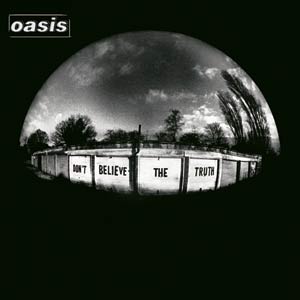
Don't believe the truth


So, I'm relaxing here listening to my Music Choice station (the thing where you listen to music through the television and it flashes info. about the song and the artist, etc. - you know, it's music television. Remember, like a decade or two ago when MTV used to play music???? It's like MTV only without Laguna Beach.) and the tune "Lyla" starts playing. It's a nice tune, I like it. But what got my attention was the album title:

Don't believe the truth

Seeing as truth-study is one of those things that occupies my mind from time to time I couldn't help but be a bit intrigued:


Why would anyone not believe "the truth"?

We can understand an apathy for truth - after all it can be a bit difficult to deal with sometimes - but can we understand someone who believes truth to be something completely unbelievable?

Is it possible to live a life that is not just devoid of truth, but, in fact, treats truth as unbelievable?

What does that say about our societies regard for "truth"?
Does "truth" even mean anything, anymore?


Or am I simply reading too much into a nifty little album title designed by a bunch of marketing gurus at a record company whose goal is to get the attention of adolesents, capture the almighty dollars of the prized 18-24 year old male demographic, and perhaps irritate a few conservatives along the way???

Tuesday, October 17, 2006

"Recognizing" Truth

Sometimes when we hear intellectual truth we recognize it at on a non-intellectual level. The truth "impacts" us with a certain force. This is particularly true with spiritual truths. For example, when someone tells us about certain aspects of the Creator God (his power and knowledge, his sovereignty or his love, and the Savior who came to die) we have the capacity to "feel" these truths. So, we may intellectually understand them and put our rational stamp of approval on them, but underneath the surface there is a sort-of spiritual frenzy going on. Not only are we understanding these truths, intellectually, but we are also absorbing them into our lives.


A simple example of this comes from the sermon I heard last Sunday. If a man is in love with a woman, he believes certain truths about his lover. Her eyes are blue, she has certain interesting characteristics, and she has a certain sense of humor. These are all "true" on a propositional level. However, for a man in love these truths have become absorbed into the deepest fabric of his being such that he does not have the ability to speak of such truths in a purely intellectual way. In fact, it is very likely that he may never have been able to intellectually and objectively analyize these truths about his lover. In the (very strange) case of love, truths are recognized on a non-intellectual level. So it is with spiritual truths.

On the other hand, of course, it is possible to merely give an intellectual nod to truth without absorbing truth in the way described above. The man who is not in love with the woman can intellectually describe certain truths about her in a detached, objective manner. Similarly, those who have never truly encountered God or never opened themselves up to the sense of divinity in the world may intellectually describe God and rationally believe in him. The degree to which we absorb truth may not be the same.

I point all this out to simply say that truth can be recognized on a non-intellectual level. We can experience truth. I believe that this implies that truth is greater than simply a correspondence between proposition and reality. In short, truth is more than intellectual/rational/objective. It is certainly all of these things, but I think it is more.


In speaking to Pilate Jesus said that "everyone of the truth hears me." (John 18:37) What does it mean to be "of" the truth?

I take this passage back to John chapter eight where Jesus accuses the religious leaders of being children of the devil, and it is the devil who "has no truth in him." (vs. 44) Now, it seems absurd to say that the devil has no knowledge of intellectual truth. It is the mark of the best liars that they know propositional truths so well that they can bend them and twist them any number of ways to suite them. Rather, it seems as though the devil has "no truth in him" because he stands in direct opposition to "the way, the truth, and the life," (John 14:6) which is Jesus, himself.

Hence, I think we recognize truth on a non-intellectual level because "truth" has much to do with our spiritual situation in relation to Christ and the Creator. It is as much a matter of our spiritual situation to Christ as it is our possession of propositional truth. I think the fact that we can recognize truth on a non-intellectual level is one clue that points this out.

[See my Aletheia Project for more essays and thoughts on truth.]
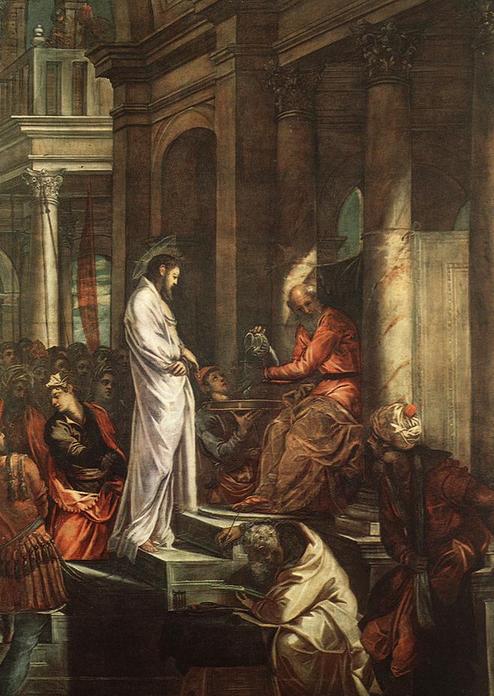
Illustration: Jesus before Pilate by Tintoretto

Thursday, July 06, 2006

The Aletheia Project

Welcome to The Aletheia Project!
A list of essays and resources to facilitate informed discussion on the nature of truth from a variety of perspectives.

About the Aletheia Project
Purpose: Facilitate informed discussion on the nature of truth from many different perspectives.

The Links of Truth - A variety of good web resources on truth.

Recognizing Truth - Can we recognize truth on a non-intellectual level???

Greg Koukl on Truth - Koukl (from Stand to Reason) came to Grace College and Seminary and I had the opportunity to hear some of his thoughts on truth and briefly interact with him.

Truth Seeker - What is a truth seeker? A few points for discussion.

Is Truth Relative or Absolute? A few discussion points.

A Theology of Truth - A few brief thoughts on a theology of truth.

The Use of Aletheia in the Gospel of John - This essay is exegetical, but with an eye on philosophical concerns.

Aletheia and the Correspondence Theory of Truth - An academic paper that examines the necessity and sufficiency of the correspondence theory of truth in light of aletheia in the Gospel of John.

Truth Dichotomy - An academic essay linking contemporary philosophy of truth with the Gospel of John.

About the Aletheia Project

This little corner of my blog is dedicated to truth-talk. I have listed some essays here that might help guide the discussion on truth whether it be from a philosophical perspective, biblical perspective, or from a cultural perspective.

The purpose of the Aletheia Project is simple:
Facilitate informed discussion on the nature of truth from many different perspectives

Questions and discussion points:

  • What does the Scriptures have to say about truth?
  • Does truth have an “essence”?
  • Is the question of truth a meaningful one?
  • How does a person’s view of truth impact their lives?
  • Does our culture’s view of truth impact the way we live or the way we perceive the world?
  • Is it possible to know truth?
  • Is it meaningful to have a debate on “absolute” vs. “relative” truth?

Discussion about truth is more necessary than ever in my own tradition – conservative Christianity. Brian McLaren in a recent Christianity Today article questioned the value of discussing absolute truth in contemporary evangelism. Doug Groothuis in Truth Decay proclaimed that the correspondence theory of truth is the only biblical view of truth. J.P. Moreland in his plenary address to the Evangelical Theological Society in 2004 declared that not only were postmodern views of truth and knowledge “confused,” but he went on to say that postmodernism, itself “is an immoral and cowardly viewpoint.”

I was cruising in my car recently and heard James Dobson on the radio discussing a recent poll that very much disturbed him. I do not recall the exact statistic, but it was something to the effect that a majority of Christians do not believe in absolute truth. This baffled Dr. Dobson so much that he was having difficulty speaking or saying anything. He clearly could not even begin to conceive of any Christian not believing in absolute truth, and he seemed reduced to lecturing his audience about how important absolute truth was. One of the things the Dobson reaction illustrates, I think, is that there is a broad gulf of understanding between the varying viewpoints. If someone like Dr. Dobson has a hard time understanding the thinking of a majority of Christians, then clearly there is a great divide.

In the philosophical world things are just as diverse, perhaps more so. There are traditional robust theories of truth, which themselves are diverse: The correspondence theories, coherence theories, pragmatic theories, etc. There are deflationary theories that question whether it is appropriate to talk of truth even having a nature. Recently there have been various advocates of pluralist approaches to truth. And add to this certain “existential” theories of truth, like Kierkegaard or Heidegger where truth is defined in terms of the subjective state of the individual, not in terms of an object to be defined. This is to say nothing of Nietzsche’s perspectives on truth.

The essays, resources, and any ensuing conversations of the Aletheia Project are dedicated to intelligently discussing the question Pilate asked so long ago: What is truth?

[Back to the Aletheia Project main page]

The use of aletheia in the Gospel of John

This is a summary of the use of alehteia in the Gospel of John. The method is exegetical, but with an eye on the philosophical concerns. As such I see it as bridging the gap between exegetical and philosophical studies on truth.

excerpt...
There are many good and worthy contributions that assist us in understanding the use of alētheia in the Gospel of John. Among these are the commentaries of Johannine scholars who contribute to our understanding of alētheia by placing them in their textual and cultural contexts. Also, there is the study by Anthony Thiselton, which is perhaps the landmark study of alētheia. In light of the alēthic biblical scholarship to date the present study does not claim to add a great deal of original exegetical insight. Rather, the goal is to build on the exegetical work of previous scholars, particularly Thiselton, to provide a summary of categories that would be useful to the current philosophical and theological discussion on truth. So, while there are many profound resources currently available on a biblical study of alētheia we are seeking, in the present analysis, to build a bridge between the biblical world of exegetical studies on alētheia and the philosophical world of truth-talk.

The reason for the selection of the Gospel of John is that for John alētheia is a critical part of the theological development of the Gospel and shows up in the midst of key passages. In the Christological theology that is arguably the book’s dominant theme we find that the Christ is the self-proclaimed “way and the truth (alētheia) and the life.” (14:6) When the Christ speaks of the Spirit we find that alētheia is used to describe the “Spirit of truth” (14:17, 15:26, 16:13). Alētheia is also a useful apparatus in the dualism that is so often commented upon: When Christ says to Pilate “everyone who is on the side of truth hears my voice” this continues the dualistic motif that separates those who embrace the Christ as coming from God from those who reject him.[2] Of all the portions of Scripture that utilize “truth” the development in the Fourth Gospel seems to be, by far, the most extensive, and the development that has the most philosophical ramifications. For this reason the Gospel of John is an important starting point for anyone interested in developing thoughts on truth in the context of Christianity...[3]
[1] Anthony C. Thiselton, “Truth,” New International Dictionary of NT Theology (Grand Rapids: Zondervan Publishing House, 1978).
[2] Crf. 1:10-12 in the important prologue and 8:42-47. The chapter 8 passage will be developed later in this paper.
[3] Morris comments on the importance of alētheia in John and also recounts the frequency of its usage concuding, “Plainly, this concept matters to John.” Leon Morris, The Gospel According to John (The New International Commentary on the New Testament; Grand Rapids: William B. Eerdman’s Publishing, 1971), 294. For more on the significance of alētheia in the Gospel of John also see S. Aalen, “Truth, a Key Word in St. John’s Gospel,” in Studia Evangelica (ed. F.L. Cross; Berlin: Akademie-Verlag, 1964), 3-24. In reading Aalen’s essay it becomes clear that the alētheia concept is a “highly developed one” and critical part of John’s Gospel and Johannine theology.


For full text .pdf file:
http://erdman31.googlepages.com/2006-GospelofJohnuseofAletheia.pdf

Comments welcome.

[Back to the Aletheia Project main page]

Truth Dichotomy

This essay examines certain philosophical trends in truth-research in light of the Gospel of John to ask the question of whether it is possible that truth has many forms (polymorphous) and also question whether truth has an "essence."

excerpt...
In the present essay we are taking note of a dichotomy that has taken place in philosophical research and reflection on the nature of truth. This dichotomy is between what we will call the analytic project, which looks at truth as an object and what we will call the existential project that focuses its attention upon the subject and the subjective process. We will take particular note of Kierkegaard, who provides us with the most emphatic declaration of this dichotomy.
After exploring the nature of this dichotomy we will turn to the Gospel of John for a summary analysis of the use of avlh,qeia. We will note the highly developed and philosophically pregnant use of this term in the Gospel of John and make a few, brief observations germane to our topic. Armed with the alēthic concepts of the Fourth Gospel we will then be ready to transition into our last point, which will be to question whether this dichotomy in philosophical truth-discussion is legitimate, desirable, or even useful in our development of a philosophy of truth.


Find the entire essay here:
http://erdman31.googlepages.com/TruthDichotomy.pdf

This essay is being submitted to publication. Comments are welcome.

[Back to Aletheia Project main page]

Truth Seeker

A few scattered thoughts of mine on what a truth-seeker is.

Is a truth-seeker someone who "follows truth wherever it leads" as Groothuis suggests? Truth for truth's sake?
Or is truth more holistic?
Is a truth-seeker really a God-seeker?
If we are not God-seekers are we really truth-seekers?

http://erdman31.googlepages.com/TruthSeeker.pdf

[Back to Aletheia Project main page]

A few brief words on a Theology of Truth

I would like to very briefly discuss a general direction for developing a theology of truth. The purpose of discussing a theology of truth, as opposed to a philosophy of truth is that a theology of truth will be developed within the context of a Christian worldview. As such, a theology of truth will take seriously the biblical account of truth, and will also quite naturally incorporate truth-talk into the work of evangelism and missions.

As I see it, there are three main areas that are addressed and help to define a theology of truth: the biblical testimony, philosophical discussion, and the cultural climate. I would like to briefly discuss each of these in the hopes of providing a general outline within which intelligent conversation can take place within the Christian community on the nature of truth and its place in the mission of the church.

The first issue that is addressed in a theology of truth is the biblical witness. This I see as the examination of the Scriptures to determine what we can say about truth. Generally speaking, there seems to be two dangerous extremes when looking into the Bible. The first is to not take seriously the witness of Scripture. In this case the revelation of God is treated far too casually and the Bible is seen as outdated and unable to really speak to the contemporary situation. On the other extreme are those who take the Bible seriously, but try to make it speak on issues it does not speak on. For example, in the past, there has been a tendency to look for a “biblical” view of truth, or to look for the “biblical” view on anything. The problem with this approach, however, is that the Bible may not speak to a particular situation and, as such, we may end up looking too deeply into certain passages and assuming that these passages speak to our issue when, in fact, they do not.

In regards to the issue of truth the danger of looking for a “biblical” view of truth is that it simply does not exist. What I mean by this is that there is no one, common element that we could apply to every use of the biblical word(s) for “truth.” Even in the Gospel of John, where truth is used more frequently than any other book in the New Testament, the word “truth” takes on different forms. So, rather than look for one, unified view of truth it may be more appropriate to look at the biblical views of truth. The goal in doing this, I believe, would be to take note of how the Scripture presents truth to us and perhaps also to note what it does not say about truth.

The second area of concern for a Christian theology of truth is to seriously engage the philosophical developments of truth. In the last hundred years or so there has been a great deal of philosophical writing and research on the nature of truth. We have seen the development of the correspondence theory, the coherence theory, pragmatist theories, various deflationary theories of truth, existential theories, and more recently various pluralist theories of truth. An investigation of these theories reveals a wide range of thinking and a many very diverse approaches to the subject. Exploration into the philosophical theories of truth can help to sharpen our discussion on truth and help guide our thinking.

If we find ourselves investigating the Scriptures and also engaging the various philosophies of truth the next question that naturally arises is: What is the relationship between philosophy and the Bible? This is a rather complicated discussion, and there will be different answers depending upon which issue is being discussed. In relationship to a theology of truth I believe that the relationship is reciprocal. That is, our study of Scripture will inform our philosophical investigations and our philosophical investigations will inform our study of Scripture. Our study of Scripture must inform our philosophy if we are at all serious about the Bible being the revelation of God. But anyone who reads Scripture will naturally do so by using their minds to think and to interpret. When we use our minds to think and interpret we are simply doing philosophy. As such, as we study philosophical theories of truth – both Christian and secular – we sharpen our ability to think and interpret Scripture.

The third area of examination for a theology of truth is the cultural. How is “truth” used in culture? What is the reaction to “truth”? By answering these questions I think that we will then be able to examine how our biblical and philosophical conclusions on truth will apply to the mission of evangelism.

In recent days there has been a great deal of debate amongst Christians regarding “absolute” and “relative” truth. The debate here is whether truth is objective, universal and fixed for all time and for all people, or if truth is relative to a specific culture or social setting. And yet I believe that as we seriously examine Scripture and think critically about these terms we may find that these distinctions are less important than we have made them out to be. For example, there are clearly truths of Scripture that are fixed for all time. These primarily relate to God and to the revelation of Jesus Christ. These are absolute claims. And yet on the biblical account there is also a very temporal dimension to truth. Truth must be lived. Truth must be proved in one’s life. Truth, in fact, seems to be about a person’s relation with God through Christ. And, so, perhaps the distinctions between “relative” and “absolute” might give way to a holistic theology of truth that recognizes the validity of the absolute and temporal perspective.

Regardless of where one falls in this debate it is critical to examine one’s theory of truth in light of contemporary culture and the presentation of the Gospel in that culture. It is also important to ask how a theology of truth impacts life and how our theology of truth impacts ourselves.

As such, we have our three components of a theology of truth: the biblical testimony, philosophical investigation, and cultural considerations. A Christian worldview will seek to engage the issue of truth on these three playing fields.

[Back to Aletheia Project main page]

The Links of Truth

The Links of Truth

Stanford Encyclopedia of Philosophy
Some excellent articles on truth. The best truth-resource on the web…well, besides my site!
Truth
Axiomatic Theories of Truth
Coherence Theory of Truth
The Correspondence Theory of Truth (aka the Doug Groothuis View)
The Deflationary View of Truth
The Identity View of Truth
The Revision Theory of Truth
Tarski’s Truth Definitions


Chuck Colson
A few paragraphs on the knowability of truth from a cultural perspective
http://www.christianitytoday.com/ct/2006/006/17.72.html

DuckRabbit
A blogger addresses the value of truth in “Gimme some truth”
http://duckrabbit.blogspot.com/2006/06/gimme-some-truth.html

Doug Groothuis
In “What is Truth?” Doug argues for the correspondence view of truth against relativism and pragmatism: http://www.leaderu.com/theology/groothuis-truth.html
“Staying True to Truth” – Cultural/Christian perspective on truth.
Doug’s article “Why Truth Matters Most” online. Originally published in JETS.

Internet Encyclopedia of Philosophy
A good introductory article on truth: http://www.iep.utm.edu/t/truth.htm
The Prosentential Theory of Truth – A deflationary-type view of truth

Soren Kierkegaard
“The crowd is untruth!” – An excellent essay by SK
Doug briefly blogged on it here: http://theconstructivecurmudgeon.blogspot.com/2005/10/against-crowd-soren-kierkegaard.html

Michael Lynch
An important philosopher of truth – A “Pluralist” view of truth. He is editor of one of the best anthologies on truth (The Nature of Truth). This is his home site with a few very useful essays.
http://www.philosophy.uconn.edu/department/lynch/lynch.htm

Scot McKnight
A brief blog entry on postmodernism and truth
http://www.jesuscreed.org/?p=516#comments

J.P. Moreland
“Truth, Contemporary Philosophy, and the Postmodern Turn”
This is a reprint of Moreland’s address at ETS in 2004. I have referenced this a few times in my essays.
http://www.str.org/site/News2?page=NewsArticle&id=5682
Here is a very brief essay on truth:
http://www.boundless.org/features/a0000911.html

Wikipedia
Wiki always has something to say: http://en.wikipedia.org/wiki/Truth

Kevin Winters
A series of blog entries on Heidegger and truth – this link is for the first in a series of blogs. Kevin’s blog primarily explores Heideggerian issues.
http://heideggerian.blogspot.com/2006/05/on-essence-of-truth-usual-concept-of.html


Please leave comments on other recommended Links of Truth. It would be nice to have links from many diverse perspectives. Any blogs or research you have written is welcome as well.

[Back to Aletheia Project main page]

Truth - Relative or Absolute?

Is truth relative or absolute? A few discussion points


These terms (“absolute” and “relative”) are vague and very unhelpful
What do we mean by “absolute” – that truth never has a reference point that is relative to the individual? And what do we mean by relative – that if we wake up in the morning and do not like the fact that “it is raining outside” we can immediately change the statement to “it is not raining outside” and that the weather will change accordingly?!

These terms set up a false dichotomy
They are meaningful enough to communicate something, but vague enough to confuse the issue. As such they force us to choose a side based upon our rejection of something, i.e. “I don’t want to be a one of those crazy post-modern types, so I think truth is absolute.” These terms often force a debate based on the perceived shortcomings of the other side and the use of stereotypes to categorize the other side. The terms are loaded with baggage. We see this every election year in the political system.

These terms seem to encapsulate the worst of the spirit of two ages: Modern and Postmodern
The Modern era seemed to be obsessed with the search of the absolute, unchanging, and timeless ideas. The Postmodern seems to be obsessed with its own narrative and historical situation. To speak of a dichotomy between “absolute” and “relative” seems to focus upon the extremes of each of these methods of thinking.

An exclusively Absolute truth is unable to see the person-relative and time-relative nature of truth
What good are absolutes if they do not touch time? Yet as soon as the absolutes touch our world they are relative to a given situation such that, if that situation had never occurred, then truth would not exist in that context. Even a traditional correspondence theory would recognize that truth is relative to the reality it expresses. Truth is relative to the person or situation being described, i.e. “the frog is on the log.” Truth, in this instance is relative to both the frog and the log.

An exclusively Absolute truth would seem to have a difficulty dealing with the variety of ways in which “truth” seems to be used in Scripture, particularly in Johannine literature.

What does “absolute” actually mean???

On the other hand…If truth is completely reduced to my own whim then we would be reduced to complete absurdity.
If even the most committed relativist, let us call him Bob, crosses the street at the same time that the bus is roaring by then the statement “Bob was squashed by the bus” is true for everyone – especially Bob!

What we see is that truth seems to have many forms and that in each of its forms there is an element of the “absolute” and an element of “relativity”:

  • Absolute in the sense that I cannot determine, at my own whim, my own truth such that I would be able to say either “there is a hair in my food” or “there is not a hair in my food.” The reality of the situation holds regardless of what I may or may not wish to believe.
  • Truth does seem to hold a relative element in terms of an action. I get this from the Gospel of John (3:21) where we find the expression “doing the truth.” In this passage truth is an action. Truth has ethical ramifications. We encounter truth in the decisions we make to act.
  • And truth also seems relative to the individual. Ex. in John 18:37 of those who are ‘of the truth’ and ‘no truth in him’ of 8:44. Also see Kierkegaard’s notion of truth: “in the mouth of this or that person something that is truth can become untruth.”[1] And “the inwardness of the existing person is truth.”[2]
  • Truth is relative to our relation to the Divine, but also absolute in that the Divine is eternal and will never perish.

In theology as well as philosophy one must be ever cautious of the dichotomies that one sets forth because these dichotomies lock one in to certain possibilities.
The dichotomy of “absolute” or “relative” might lock us in to undesirable situations. If we are relativists then we are absurd and are not honest about the fact that we live according to absolutes. If we are absolutists then we are in danger of failing to see that truth touches the temporal world and that truth is always relative to people or situations. If we are absolutists then we may lose the ability to capture the ethical and existential aspects of truth that we see in the Gospel of John, for example.[3]

The “Relative/Absolute” distinction must be abandoned in favor of a more holistic view of truth that is more aware of the subtle nuances of the various forms of truth.

The Absolutist might reply that I have missed the point:

  • We (the Absolutists) are not trying to say that truth is not relative in some way to the temporal world, rather, we are trying to prove that truth does not depend upon the whim of each individual. The person cannot determine, willy-nilly, what truth is for himself, and thus spin out into utter relativity and complete irrelevancy.
  • But the Absolute/Relative distinction does not help in getting to the concern of the Absolutist. So, the above objection goes to my point: Let us define our concern and not confuse and convolute the issue by using obscure terms like “Absolute” and “Relative.” Let us recognize both the absolute and relative nature of truth and then, from that point, we can express our particular concerns more precisely (i.e. that truth is not to be determined at the whim of the individual’s personal preference).

Conclusion
The distinction between “absolute” and “relative” seems to be vague and unhelpful. They are terms that come loaded with baggage. Unless these terms are more clearly defined it may be better to conduct the truth-discussion on other grounds.


Footnotes:
[1] Søren Kierkegaard, Concluding Unscientific Postscript to Philosophical Fragments, Vol. 1, Translated by Howard V. Hong and Edna H. Hong (Princeton, New Jersey: Princeton University Press, 1992), page 202.
[2] Ibid., p. 205
[3] See my Truth in the Gospel of John: A summary of key alētheia passages useful for philosophical discussion at www.theosproject.blogspot.com.

[Back to Aletheia Project main page]

Friday, January 13, 2006

Academic Papers

Here is a listing of my academic papers....

Qohelet and Deconstruction

Aletheia and the Correspondence Theory of Truth
This is my research on aletheia and the correspondence theory of truth...

Truth Dichotomy
This essay examines certain philosophical trends in truth-research in light of the Gospel of John to ask the question of whether it is possible that truth has many forms (polymorphous) and also question whether truth has an "essence."

Open Theism: An Introduction
A very lengthy introduction to the theological movement known as "Open Theism." In this paper I take no position on Open Theism, but try to analyze the movement based upon the writings of its major advocates.
This paper was also published on the official Open Theism informational website. You can access this same paper here: http://www.opentheism.info/pages/opposition/

Kevin Vanhoozer's "Discourse on Matter"
An indepth interaction with Vanhoozer's essay dealing with a key hermeneutical question: To what degree is understanding an activity of the interpreter and to what degree is the interpreter a passive recipient?

Hermeneutics and an Internalist Epistemology This paper examines the impact of epistemic Internalism on biblical hermeneutics. In the past Internalism has dominated epistemology. What is the impact of this upon biblical hermeneutics? I think the impact is substatial. This paper I completed as part of a course requirement for a fantastic hermeneutics class taught by a fantastic Prof. - Dr. D. Brent Sandy.

A Problematic Theology
A short essay in length, but very broad in scope. I question the theological methodology that sets as its goal the solving of theological problems (for example the "problem" of free will and predestination, or the "problem" of the Trinity, etc.).

The Strange and Exclusive Claims of Christ
Ok, this one is short and really isn't very "academic," but here it is.


The Imprecatory Psalms:

I wasn't sure this really fit the category of "academic," but I did complete them as a part of a class assignment at Grace Theological Seminary. It was a series of three sermons. These are written in regular and common language and are written to be spoken. The sermons represent a great deal of research that I have done on the Imprecatory Psalms, particularly Psalm 137.

Sermon One - An Introduction to the Imprecatory Psalms
Sermon Two - The Cries of the Heart
Sermon Three - The Imprecatory Psalms: What does it all mean?

The Imprecatory Psalms - A Summary
This is a summary of my thoughts on the Imprecatory Psalms.

Academic Research on the Imprecatory Psalms
Here is some of the research associated with the above sermons. Unfortunately, I do not have the footnotes on this yet...but, God willing, I will someday! This is the deep and tedious exegetical research - exegesis at its worst!!

Sunday, January 01, 2006

Aletheia and the Correspondence Theory of Truth

In this paper I try to combine careful exegesis with philosophical refelction. My subject is the correspondence theory of truth. This theory has been defended with great fervor by many in Evangelical circles. I have attempted to examine this theory strictly from the perspective of the aletheia of the Fourth Gospel and allow the proverbial chips to fall where they may.

The result? I find that the correspondence theory is necessary and is foundational for making sense of certain alethic passages in The Gospel of John. However, I also find that it is not sufficient to capture the aletheia of the Fourth Gospel. I find in my research that it would be advisable not to restrict "truth" to the correspondence theory. To do so seems to deny the author his alethic intent and thus do harm to the Fourth Gospel.

You can find the full text here:
http://erdman31.googlepages.com/Correspondence-aletheia.pdf

Here are a few excperts:
The purpose of this paper is to carefully analyze the concept of alētheia developed by the Gospel of John and to examine how this relates to ­the Correspondence Theory of Truth. The first step in this process, then, is exegetical. The goal is to apply an organic understanding of alētheia as it appears in several key passages in the Fourth Gospel. The second step is to turn the focus on the Correspondence Theory of Truth to understand the implications for the theory. Specifically, we want to examine the necessity and/or the sufficiency of the theory.

By necessity we wish to examine whether the Correspondence Theory of Truth is foundational to alētheia in the Fourth Gospel. Is it possible to understand the use of alētheia without holding to the Correspondence Theory of Truth? Or must we hold to some form of the theory to make sense of John’s alētheia as he develops this concept in various contexts?
When we speak of sufficiency we are dealing with explanatory scope. Specifically, we are asking if the Correspondence Theory can adequately account for everything that alētheia entails in the Gospel of John. What is important to note in our approach is that it is possible for the Correspondence Theory to be necessary, but not sufficient. It is not an all-or-nothing proposition whereby the theory if necessary must also be sufficient. But then it is obvious on this account that if the theory is found to be unnecessary, then this would entail that the Correspondence Theory is also not sufficient.


By focusing on the Gospel of John, we are examining a book in the Scriptures that has a very deep regard for truth (alētheia)....

...we return to the Groothuis quotation we cited earlier, “The correspondence view of truth is not simply one of many options for Christians. It is the only biblically and logically grounded view of truth available and allowable. We neglect or deny it to our peril and disgrace.” On the one hand we understand Groothuis’ enthusiasm to preserve the necessity of the Correspondence Theory. This is clear from our study of the use of alētheia in the Gospel of John. We particularly analyzed 4:18 and 19:14 to see that some form of the Correspondence Theory was absolutely necessary and foundational to alētheia in the Fourth Gospel. We saw that the whole meaning of these passages would collapse without this common sense notion of correspondence. It is imperative that we defend the necessity of the Correspondence Theory.On the other hand, to say, as Groothuis does, that this view of truth is “the only biblically and logically grounded view of truth available and allowable” seems to dramatically overstate the case and puts us in danger of denying the very Bible Groothuis is seeking to defend...

Please post comments of all kinds - I look forward to feedback!